
Introducción
Al seleccionar sujetadores para un proyecto industrial, una de las preguntas más comunes que enfrentan los compradores es si elegir Sujetadores acero al carbono o sujetadores acero inoxidable.
A primera vista, la elección puede parecer sencilla: acero inoxidable resiste la corrosión, mientras que acero al carbono es más resistente y económico. Sin embargo, la verdadera decisión rara vez es tan sencilla. Factores como exposición ambiental, requisitos de carga, expectativas de mantenimiento y costo total del ciclo de vida todos influyen en qué material funciona mejor.
Esta guía explica la diferencias reales entre los sujetadores acero al carbono y acero inoxidable, cuándo cada material funciona mejor y cómo los ingenieros y los equipos de adquisiciones pueden tomar la decisión correcta para sus aplicaciones.
¿Qué son los sujetadores acero al carbono?
Los sujetadores acero al carbono están hechos principalmente de hierro y carbono, con un contenido de carbono que normalmente oscila entre 0,05% a aproximadamente 0,60% dependiendo de la fuerza requerida.
Son muy utilizados porque ofrecen:
- Alta resistencia después del tratamiento térmico.
- Buena maquinabilidad
- Amplia disponibilidad en todos los estándares de pernos y tornillos
- Menor costo en comparación con los materiales aleados.
La mayoría de los pernos industriales utilizados en construcción y maquinaria son acero al carbono.
Grados comunes de sujetadores acero al carbono
Los estándares típicos incluyen:
- Grado 2 / Grado 5 / Grado 8 (Sistema SAE)
- Clase 4.8 / 8.8 / 10.9 / 12.9 (Sistema métrico ISO)
Las calificaciones más altas generalmente indican Mayor resistencia a la tracción debido al tratamiento térmico..
Generalmente se requieren revestimientos de superficie
A diferencia de acero inoxidable, acero al carbono Se corroe naturalmente cuando se expone a la humedad o productos químicos.. Para mejorar la resistencia a la corrosión, los sujetadores suelen estar recubiertos, como por ejemplo:
- Galvanizado
- Galvanizado en caliente
- Galvanizado mecánico
- óxido negro
- Recubrimientos Dacromet o Geomet
Sin estos recubrimientos, los sujetadores acero al carbono pueden oxidarse rápidamente en ambientes exteriores.
¿Qué son los sujetadores acero inoxidable?
Los sujetadores acero inoxidable están hechos de aleaciones de hierro que contienen cromo (normalmente ≥10,5%). El cromo forma una fina capa de óxido pasiva que protege el metal de la corrosión.
Esta capa de autoprotección es la diferencia clave con respecto a acero al carbono.
Grados comunes de sujetadores acero inoxidable
Los grados más utilizados incluyen:
A2 acero inoxidable (304)
- Buena resistencia a la corrosión general
- Adecuado para ambientes interiores y exteriores.
A4 acero inoxidable (316)
- Contiene molibdeno
- Mejor resistencia a agua salada y corrosión química
Estos grados se denominan comúnmente como:
- A2-70
- A4-70
- A4-80
El número indica el clase mínima de resistencia a la tracción.
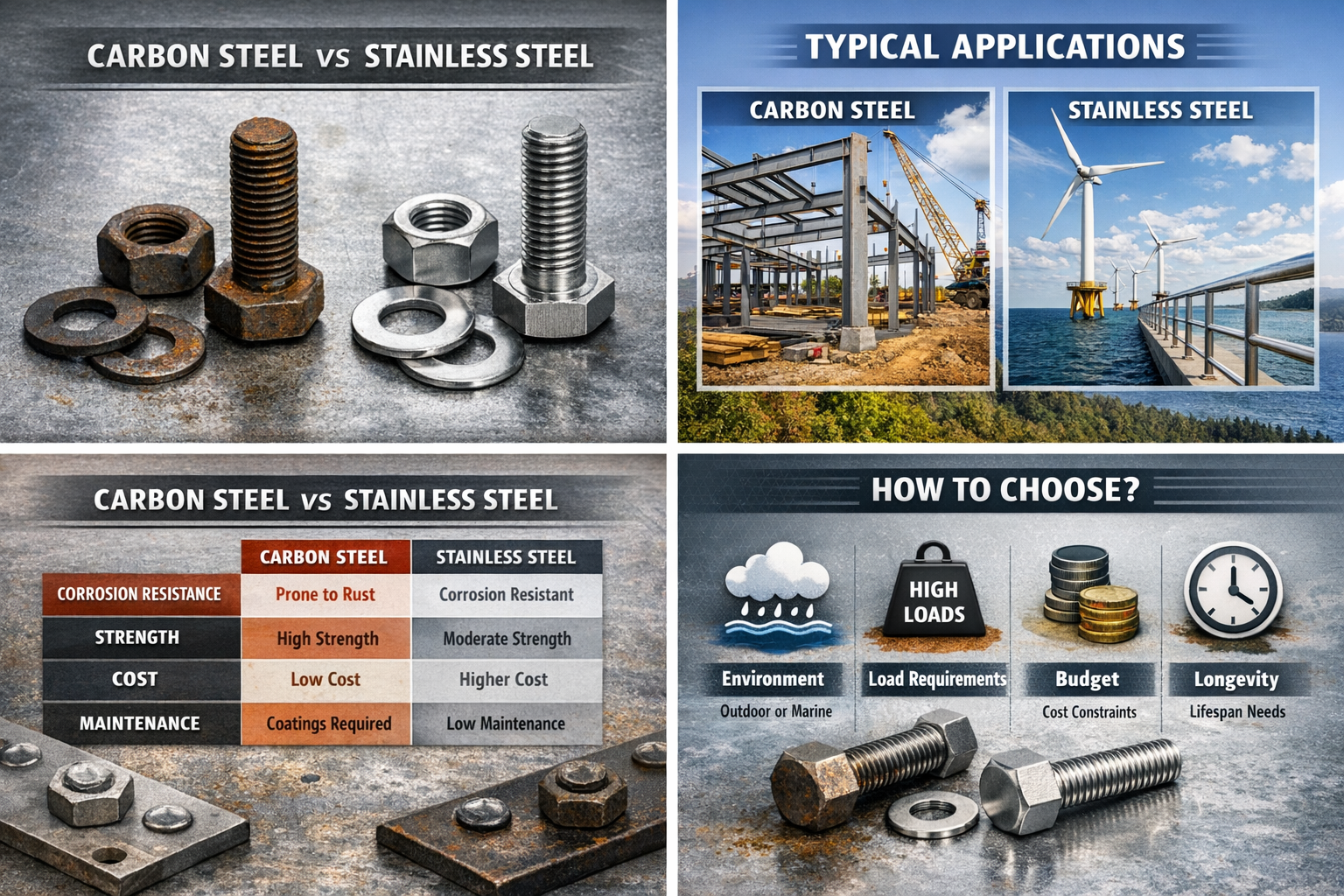
Sujetadores acero al carbono vs acero inoxidable: diferencias clave
1. Resistencia a la corrosión
Este suele ser el factor de decisión principal.
acero inoxidable sujetadores
- Naturalmente resistente al óxido
- Adecuado para ambientes exteriores, marinos y húmedos
- No requiere recubrimiento
acero al carbono sujetadores
- Se corroe fácilmente sin recubrimientos.
- Los revestimientos protectores pueden retrasar la oxidación, pero eventualmente pueden desgastarse.
Ejemplo:
- Maquinaria de interior → acero al carbono suele ser suficiente
- Instalaciones solares costeras → Normalmente se prefiere acero inoxidable
2. Resistencia y capacidad de carga
Los sujetadores acero al carbono a menudo ofrecen grados de mayor resistencia.
Por ejemplo:
- La clase 12.9 pernos con hexágono interior suele ser acero al carbono
- Los sujetadores acero inoxidable rara vez exceden A4-80 niveles de fuerza
Esto significa:
Las aplicaciones estructurales de alta carga a menudo requieren sujetadores acero al carbono.
Ejemplos típicos:
- Conexiones de acero estructural
- Maquinaria pesada
- Ensambles automotrices
3. Consideraciones de costos
Los sujetadores acero inoxidable son significativamente más caro.
Las razones incluyen:
- Elementos de aleación como cromo y níquel.
- Mayor costo de materia prima
- Procesos de producción más complejos
En muchos mercados:
- Los sujetadores de acero inoxidable pueden costar 2–4 veces más que acero al carbono
Para proyectos de gran volumen, la elección del material puede afectar significativamente el presupuesto total.
4. Costo de mantenimiento y ciclo de vida
Aunque acero inoxidable es más caro al principio, puede reducir el mantenimiento a largo plazo.
Escenarios de ejemplo:
acero al carbono con galvanizado:
- Puede requerir reemplazo después de varios años al aire libre
acero inoxidable:
- puede durar décadas en entornos similares
Para infraestructuras o instalaciones solares, El costo del ciclo de vida puede favorecer a acero inoxidable..
5. Apariencia
Los sujetadores acero inoxidable mantienen un acabado metálico limpio y resistir las manchas.
Los sujetadores acero al carbono con revestimientos pueden:
- Decolorarse con el tiempo
- Mostrar manchas de óxido
Por este motivo, acero inoxidable suele elegirse para:
- Estructuras arquitectónicas
- Instalaciones visibles
- Equipos de procesamiento de alimentos
Cuando los sujetadores acero al carbono son la mejor opción
Los sujetadores acero al carbono suelen ser la opción correcta cuando:
Se requiere alta resistencia
Aplicaciones como acero estructural o equipos pesados a menudo requieren Pernos de grado 10.9 o 12.9.
El medio ambiente está controlado
La maquinaria interior, las carcasas de equipos y las instalaciones de fábrica suelen tener una exposición mínima a la corrosión.
El costo es un factor importante
Grandes proyectos que involucran decenas de miles de tornillos A menudo eligen acero al carbono para controlar los presupuestos.
Los recubrimientos pueden proporcionar protección suficiente
Los pernos galvanizados en caliente se utilizan ampliamente en construcción e infraestructura.
Si busca pernos para uso estructural pesado, puede explorar las opciones disponibles en la página pagina de productos:
https://xzfastener.com/home/products/
Cuando los sujetadores acero inoxidable son la mejor opción
acero inoxidable se convierte en la mejor opción cuando El riesgo de corrosión supera las preocupaciones sobre los costos..
Los casos típicos incluyen:
Instalaciones al aire libre
La exposición a la lluvia acelera la corrosión en acero al carbono.
Ejemplos:
- Sistemas de montaje solar
- Barandillas al aire libre
- Estructuras de señalización
Ambientes marinos o costeros
El agua salada aumenta drásticamente las tasas de corrosión.
Aquí a menudo se prefiere A4 (316) acero inoxidable.
Procesamiento de alimentos y aplicaciones sensibles a la higiene
Los sujetadores acero inoxidable son más fáciles de limpiar y resisten la contaminación.
Infraestructura a largo plazo
Los proyectos donde el acceso para mantenimiento es difícil se benefician de los materiales resistentes a la corrosión.
Factores que los compradores deben evaluar antes de elegir
Antes de comprar sujetadores, los compradores deben evaluar varias condiciones clave.
1. Exposición ambiental
Preguntar:
- ¿Los sujetadores estarán expuestos a la lluvia?
- ¿Está la instalación cerca del océano?
- ¿Hay productos químicos o agentes de limpieza presentes?
Las condiciones ambientales a menudo determinan la selección del material.
2. Requerido clase de resistencia
Confirma el requisitos de carga y estructurales.
Usando acero inoxidable donde Se requiere acero al carbono de alta resistencia puede crear riesgos de seguridad.
3. Compatibilidad con otros materiales
Mezclar diferentes metales puede causar corrosión galvánica.
Ejemplo:
Los pernos acero inoxidable utilizados con estructuras de aluminio pueden acelerar la corrosión bajo ciertas condiciones.
4. Revestimiento versus elección de material
A veces un sujetador revestido acero al carbono puede proporcionar suficiente resistencia a la corrosión a un costo menor.
Los recubrimientos de ejemplo incluyen:
- Galvanizado en caliente
- Dacromet
- Recubrimiento de zinc-níquel
Si no está seguro de qué recubrimiento funciona mejor, puede analizar los requisitos de su proyecto con el equipo de ingeniería a través de pagina de contacto:
https://xzfastener.com/home/contact-us/
Errores comunes que cometen los compradores
Suponiendo que acero inoxidable es siempre más fuerte
En realidad, muchos Los sujetadores de alta resistencia son acero al carbono, no acero inoxidable.
Ignorar las condiciones ambientales
El uso de acero al carbono galvanizado estándar en exteriores a menudo conduce a oxidación prematura.
Elegir basándose únicamente en el precio
Un sujetador más barato puede llevar a costos de mantenimiento o reemplazo más adelante.
Pasando por alto los requisitos personalizados
Algunos proyectos requieren:
- Recubrimientos especiales
- Dimensiones no estándar
- Calificaciones específicas del proyecto
En estos casos, fabricación de sujetadores personalizados puede ser la mejor solución:
https://xzfastener.com/home/customized-service/
Conclusiones clave
- Los sujetadores acero al carbono brindan mayor resistencia y menor costo, lo que los hace ideales para aplicaciones estructurales y de carga pesada.
- Los sujetadores acero inoxidable ofrecen una resistencia superior a la corrosión, especialmente en ambientes exteriores o marinos.
- La elección correcta depende de entorno, requisitos de carga, expectativas de mantenimiento y presupuesto del proyecto.
- Los recubrimientos pueden mejorar la resistencia a la corrosión del acero al carbono, pero es posible que no igualen al acero inoxidable en entornos hostiles.
- La evaluación del costo del ciclo de vida a menudo conduce a mejores decisiones sobre materiales que comparar únicamente el precio de compra.
Preguntas frecuentes
¿Son los sujetadores acero inoxidable más fuertes que los sujetadores acero al carbono?
No necesariamente. Elementos de fijación de alta resistencia como Pernos de grado 10.9 o 12.9 suelen ser acero al carbono y pueden superar la resistencia de la mayoría de los sujetadores acero inoxidable.
¿Se oxidan siempre los sujetadores acero al carbono?
Sí, acero al carbono puede oxidarse si no se protege. Sin embargo, Recubrimientos como galvanizado o galvanizado. puede retrasar significativamente la corrosión.
¿Cuándo debo utilizar sujetadores A4 (316) acero inoxidable?
Se recomienda A4 acero inoxidable para Ambientes marinos, instalaciones costeras y exposición a sustancias químicas., donde la resistencia a la corrosión es crítica.
¿Pueden los sujetadores acero inoxidable reemplazar los pernos galvanizados?
A veces, pero no siempre. acero inoxidable proporciona una mejor resistencia a la corrosión, pero Aún se puede preferir el acero al carbono galvanizado por razones de resistencia estructural o costos..
¿Dónde puedo conseguir sujetadores industriales o solicitar especificaciones personalizadas?
Puede obtener más información sobre el fabricante y las capacidades disponibles aquí:
https://xzfastener.com/home/about-us/
Conclusión
Elegir entre Sujeciones acero al carbono y acero inoxidable No es simplemente una cuestión de precio o resistencia a la corrosión. El material correcto depende de el medio ambiente, la resistencia requerida, la vida útil esperada y las consideraciones generales del costo del proyecto.
Los sujetadores acero al carbono siguen siendo la opción estándar para aplicaciones estructurales de alta resistencia y proyectos sensibles a los costos, especialmente cuando los recubrimientos protectores son suficientes. Los sujetadores acero inoxidable, por otro lado, proporcionan Fiabilidad a largo plazo en entornos corrosivos., lo que los convierte en la mejor opción para aplicaciones exteriores, marinas e higiénicas.
Para compradores e ingenieros de proyectos, el enfoque más confiable es evaluar primero el entorno operativo y los requisitos mecánicosLuego, elija el material que equilibre durabilidad, seguridad y costo.
 English
  Español
  Français
  Español de México
  العربية
  Deutsch
  Русский
  Tiếng Việt
  Bahasa Indonesia
  Italiano
  简体中文
简体中文