
مقدمة
تواجه الهياكل الخارجية التعرض المستمر للرطوبة وتغيرات درجات الحرارة والملوثات البيئية. إذا تم استخدام طلاء التثبيت الخاطئ، فقد يظهر التآكل في غضون أشهر، مما يؤدي إلى فشل هيكلي، أو صيانة مكلفة، أو الاستبدال المبكر.
بالنسبة لمديري المشتريات والمقاولين والمهندسين، فإن اختيار طلاء التثبيت الصحيح لا يعد مجرد قرار مادي - بل هو قرار يتعلق بالمتانة وتكلفة دورة الحياة.
يشرح هذا الدليل كيفية اختيار طلاء التثبيت المناسب للاستخدام الخارجي. ويغطي أنواع الطلاء الأكثر شيوعًا، وكيفية أدائها في بيئات مختلفة، وكيفية الاختيار العملي بناءً على ظروف المشروع.
المحتوى الرئيسي
ما أهمية طلاء المثبتات في البيئات الخارجية؟
تتآكل مثبتات فولاذ كربوني العارية بسرعة عند تعرضها للهواء والرطوبة. تعمل البيئات الخارجية على تسريع هذه العملية من خلال:
- المطر والرطوبة
- تقلبات درجات الحرارة
- التعرض للأشعة فوق البنفسجية
- التلوث الصناعي
- رش الملح الساحلي
- التعرض الكيميائي
بدون الحماية الكافية من التآكل، يمكن للمثبتات أن:
- تفقد قوتها بسبب الصدأ
- يصبح من الصعب إزالتها أثناء الصيانة
- تسبب تلطيخ على المواد المحيطة
- يؤدي إلى فشل المفاصل
الطلاءات السحابة بمثابة حاجز وقائي أو طبقة التضحية لمنع التآكل من مهاجمة المعدن الأساسي.
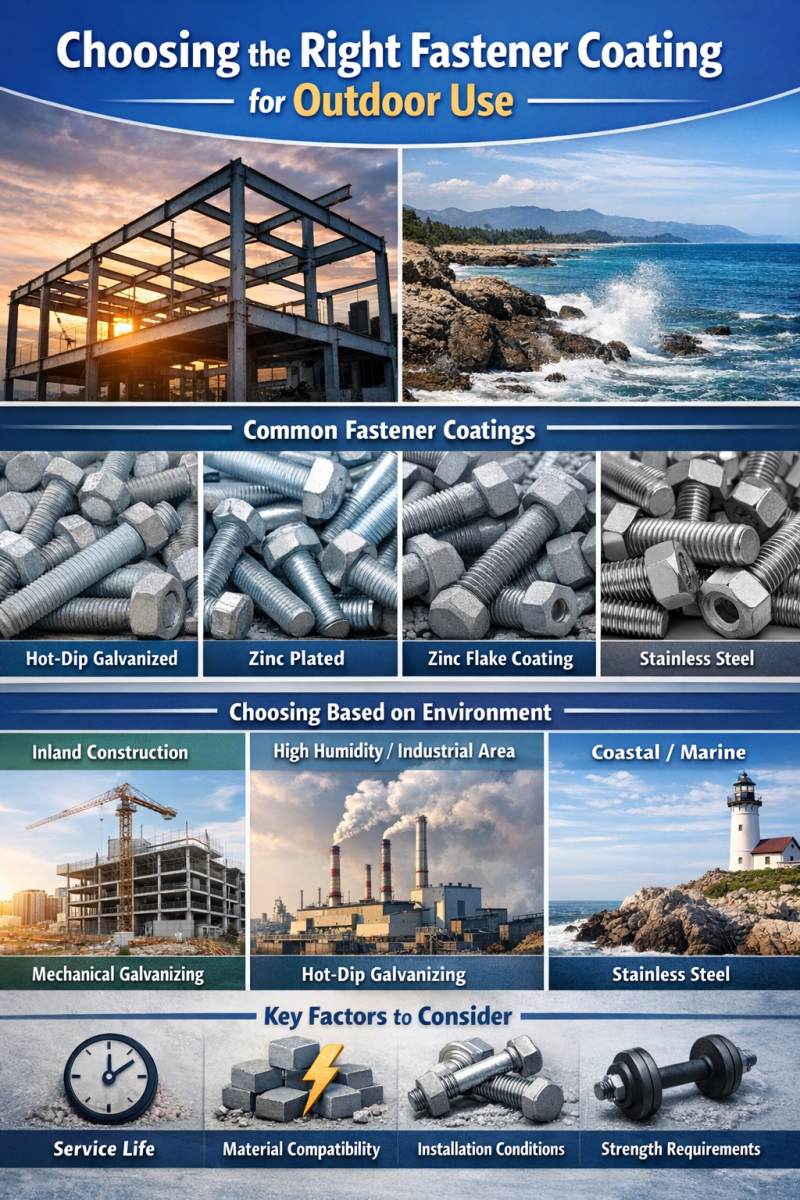
طلاءات التثبيت الشائعة للتطبيقات الخارجية
يعتمد اختيار الطلاء المناسب على التعرض البيئي والمتطلبات الهيكلية وعمر المشروع.
1. الجلفنة بالغمس الساخن (HDG)
تعتبر الجلفنة بالغمس الساخن واحدة من الطلاءات الأكثر استخدامًا على نطاق واسع للمثبتات الهيكلية الخارجية.
كيف يعمل
يتم غمر المثبتات في الزنك المنصهر، مما يخلق طبقة سميكة من الزنك المعدني مرتبطة بسطح الفولاذ.
المزايا
- مقاومة ممتازة للتآكل
- طلاء سميك (عادة 40-80 ميكرومتر)
- عمر خدمة طويل في البيئات الخارجية
- يوفر الحماية المضحية في حالة تلف الطلاء
تطبيقات نموذجية
- الهياكل الفولاذية
- الجسور
- أنظمة تركيب الطاقة الشمسية
- البنية التحتية للطرق السريعة
- تأطير البناء
القيود
- تشطيب سطحي أكثر خشونة
- قد يؤثر على ملاءمة الخيط للمثبتات الأصغر حجمًا
- ليست مثالية للتجمعات شديدة التسامح
بالنسبة لمعظم المشاريع الهيكلية الخارجية، غالبًا ما تكون البراغي المجلفنة بالغمس الساخن هي الخيار الافتراضي.
2. طلاء الزنك (الجلفنة الكهربائية)
يستخدم طلاء الزنك بشكل شائع في أدوات التثبيت الصناعية العامة.
كيف يعمل
يتم طلاء طبقة رقيقة من الزنك بالكهرباء على سطح التثبيت.
المزايا
- لمسة نهائية ناعمة
- تكلفة منخفضة
- مناسبة للإنتاج بكميات كبيرة
تطبيقات نموذجية
- الآلات الداخلية
- أجهزة خفيفة
- البيئات الخاضعة للرقابة
قيود الاستخدام في الهواء الطلق
- طلاء رقيق (عادة 5-15 ميكرومتر)
- حماية محدودة من التآكل
- عمر قصير في البيئات الرطبة أو الرطبة
بالنسبة للمشاريع الخارجية، عادةً ما يكون طلاء الزنك وحده غير كافية ما لم يتم دمجها مع طلاءات إضافية.
3. الجلفنة الميكانيكية
تستخدم الجلفنة الميكانيكية عمليات التقليب لربط مسحوق الزنك بالمثبتات.
المزايا
- طلاء موحد
- لا يوجد خطر تقصف الهيدروجين
- جيد للسحابات عالية القوة
تطبيقات نموذجية
- البراغي الهيكلية
- أجهزة البناء
- معدات خارجية
بالمقارنة مع الطلاء الكهربائي، توفر الجلفنة الميكانيكية مقاومة أفضل للتآكل، على الرغم من أنها عادة ما تكون أقل من الجلفنة بالغمس الساخن.
4. طلاءات رقائق الزنك (Dacromet / Geomet)
يتم استخدام طلاءات رقائق الزنك بشكل متزايد في الصناعات التي تتطلب مقاومة التآكل والخيوط الدقيقة.
كيف يعمل
يتم تطبيق خليط من رقائق الزنك والألومنيوم ومعالجته لتشكيل حاجز وقائي.
المزايا
- مقاومة عالية للتآكل
- طلاء رقيق وموحد
- لا يوجد تقصف الهيدروجين
- ممتاز للبراغي عالية القوة
تطبيقات نموذجية
- مكونات السيارات
- أنظمة طاقة الرياح
- هياكل تركيب الطاقة الشمسية
- الآلات الخارجية
يمكن تحقيق هذه الطلاءات 500-1000+ ساعة مقاومة لرذاذ الملح، حسب المواصفات.
5. مثبتات فولاذ مقاوم للصدأ
على الرغم من أنه ليس طلاءًا تقنيًا، إلا أن فولاذ مقاوم للصدأ غالبًا ما يتم أخذه في الاعتبار عندما تكون مقاومة التآكل أمرًا بالغ الأهمية.
تشمل الدرجات الشائعة ما يلي:
- A2 / 304 فولاذ مقاوم للصدأ - البيئات الخارجية العامة
- A4 / 316 فولاذ مقاوم للصدأ - البيئات البحرية أو الساحلية
المزايا
- مقاومة التآكل الطبيعية
- لا يوجد خطر تلف الطلاء
- مظهر نظيف
القيود
- تكلفة أعلى
- قوة أقل مقارنة ببعض مسامير فولاذ سبائكي
- خطر الانزعاج أثناء التثبيت
بالنسبة للبيئات الساحلية أو الكيميائية، قد يتفوق فولاذ مقاوم للصدأ على مثبتات فولاذ كربوني المطلية.
كيفية اختيار الطلاء المناسب بناءً على البيئة
يعتمد الطلاء الأفضل بشكل كبير على المكان الذي سيتم استخدام أداة التثبيت فيه.
بيئة خارجية معتدلة
أمثلة:
- البناء الداخلي
- المباني السكنية
- المعدات الخارجية ذات التعرض المحدود
الخيارات الموصى بها:
- الجلفنة الميكانيكية
- طلاء الزنك السميك مع المعطف الخفيف
- الجلفنة بالغمس الساخن القياسية
الرطوبة العالية أو المناطق الصناعية
أمثلة:
- المصانع
- النباتات الكيماوية
- البيئات الحضرية مع التلوث
الخيارات الموصى بها:
- الجلفنة بالغمس الساخن
- أنظمة طلاء رقائق الزنك
- أنظمة طلاء دوبلكس (زنك + طبقة نهائية)
البيئات الساحلية أو البحرية
يؤدي التعرض للملح إلى تسريع عملية التآكل بشكل كبير.
الخيارات الموصى بها:
- فولاذ مقاوم للصدأ A4 (316)
- طلاءات رقائق الزنك عالية الأداء
- الجلفنة البحرية المتخصصة
تجنب استخدام طلاء الزنك القياسي في هذه الظروف.
هياكل الطاقة الشمسية والمتجددة
تتطلب أنظمة تركيب الطاقة الشمسية عمر خدمة طويل مع الحد الأدنى من الصيانة.
الخيارات الموصى بها:
- البراغي الهيكلية المجلفنة بالغمس الساخن
- طلاءات رقائق الزنك والألومنيوم
- فولاذ مقاوم للصدأ للمناطق ذات التعرض العالي
غالبًا ما تحتاج السحابات المستخدمة في المنشآت الشمسية إلى أكثر من 20 عامًا من مقاومة التآكل.
العوامل التي يجب على المشترين مراعاتها قبل اختيار الطلاء
1. مدة الخدمة المتوقعة
اطرح الأسئلة التالية:
- هل المشروع مصمم لمدة 5 أو 10 أو 25 سنة؟
- هل سيتم استبدال السحابات لاحقًا؟
عادةً ما تبرر المشاريع ذات العمر الأطول طلاءات أقوى.
2. التوافق مع المواد الأساسية
قد يؤدي استخدام المثبتات المجلفنة مع معادن معينة إلى حدوث ذلك التآكل الجلفاني.
أمثلة:
- هياكل الألمنيوم
- تجميعات فولاذ مقاوم للصدأ
يجب تقييم توافق المواد أثناء التصميم.
3. شروط التثبيت
تؤثر بعض الطلاءات على أداء التثبيت.
أمثلة:
- قد تتطلب الطلاءات السميكة خيوطًا كبيرة الحجم
- قد يتطلب فولاذ مقاوم للصدأ تزييتًا لمنع التهيج
يجب أن تتوافق مواصفات عزم الدوران مع نظام الطلاء.
4. متطلبات القوة
قد تحتوي البراغي عالية القوة (على سبيل المثال، الدرجة 10.9 أو ASTM A490) على قيود على الطلاء.
يمكن أن تسبب عمليات الطلاء الكهربائي هشاشة الهيدروجينوهذا هو السبب وراء تفضيل الجلفنة الميكانيكية أو طلاء رقائق الزنك في كثير من الأحيان.
الأخطاء الشائعة عند اختيار طلاءات التثبيت الخارجية
الاختيار على أساس السعر وحده
قد تؤدي الطلاءات منخفضة التكلفة إلى تآكل سريع، مما يتطلب صيانة باهظة الثمن لاحقًا.
تجاهل التعرض البيئي
أحيانًا يتم تثبيت أدوات التثبيت الداخلية في الخارج بسبب أخطاء الشراء.
خلط المواد غير المتوافقة
قد يؤدي الجمع بين مثبتات فولاذ مقاوم للصدأ والمكونات المجلفنة إلى تسريع التآكل في ظروف معينة.
لا تفكر في الوصول إلى الصيانة
إذا كان من الصعب الوصول إلى أدوات التثبيت بعد التثبيت، فإن الحماية الأعلى من التآكل تستحق التكلفة.
نصائح عملية للمشتريات
عند تحديد مصادر السحابات للمشاريع الخارجية:
- تأكيد الطلاء النوع والسمك
- طلب بيانات اختبار رش الملح إن أمكن
- التحقق من الامتثال للمعايير مثل ASTM أو ISO أو DIN
- تأكيد ما إذا كان التسامح موضوع تتأثر بالطلاء
- ضمان توافق الطلاء مع مواد المشروع
بالنسبة للمشاريع الكبيرة، يمكن أن يساعد العمل مع مورد ذي خبرة في منع أخطاء المواصفات المكلفة.
يمكنك استكشاف أنواع أدوات التثبيت المتاحة على
صفحة جميع المنتجات:
https://xzfastener.com/home/products/
إذا كان مشروعك يتطلب طلاءات محددة أو مواصفات مخصصة، تتوفر خدمات التصنيع المخصصة:
https://xzfastener.com/home/customized-service/
الوجبات السريعة الرئيسية
- تعتبر طبقات التثبيت ضرورية لمنع التآكل في البيئات الخارجية.
- تعد الجلفنة بالغمس الساخن أحد أكثر الخيارات الموثوقة للتطبيقات الهيكلية الخارجية.
- عادة لا يوفر طلاء الزنك وحده حماية كافية في الهواء الطلق.
- غالبًا ما تتطلب البيئات الساحلية والبحرية فولاذ مقاوم للصدأ أو طلاءات عالية الأداء.
- يعتمد الاختيار الصحيح للطلاء على ظروف التعرض وعمر الخدمة ومتطلبات التثبيت.
الأسئلة الشائعة
ما هو أفضل طلاء قفل للاستخدام في الهواء الطلق؟
تعتبر الجلفنة بالغمس الساخن عادةً واحدة من الطلاءات الأكثر موثوقية للتطبيقات الهيكلية الخارجية لأنها توفر حماية سميكة من الزنك وعمر خدمة طويل.
هل السحابات المطلية بالزنك مناسبة للبيئات الخارجية؟
يوفر طلاء الزنك القياسي مقاومة محدودة للتآكل ولا يُنصح به بشكل عام للتعرض الخارجي طويل الأمد ما لم يتم دمجه مع طبقات حماية إضافية.
متى يجب استخدام مثبتات فولاذ مقاوم للصدأ في الهواء الطلق؟
تعتبر مثبتات فولاذ مقاوم للصدأ مثالية للمناطق الساحلية أو البيئات البحرية أو التطبيقات التي تكون فيها مقاومة التآكل والمظهر أمرًا مهمًا.
هل تؤثر السحابات المغلفة على قوة الترباس؟
يمكن لبعض عمليات الطلاء، وخاصة الطلاء الكهربائي، أن تؤدي إلى تقصف الهيدروجين في البراغي عالية القوة. غالبًا ما تكون الجلفنة الميكانيكية أو طلاء رقائق الزنك خيارات أكثر أمانًا للمثبتات عالية القوة.
ما هي مدة بقاء السحابات المجلفنة في الهواء الطلق؟
يعتمد العمر الافتراضي على البيئة، ولكن يمكن أن توفر أدوات التثبيت المجلفنة بالغمس الساخن في كثير من الأحيان 15-50 سنة من الحماية من التآكل في العديد من الظروف الخارجية.
الاستنتاج
يتطلب اختيار طلاء التثبيت المناسب للاستخدام الخارجي تحقيق التوازن بين مقاومة التآكل والتكلفة ومتطلبات القوة والتعرض البيئي.
بالنسبة لمعظم التطبيقات الهيكلية الخارجية، توفر المثبتات المجلفنة بالغمس الساخن حلاً موثوقًا وفعالاً من حيث التكلفة. في البيئات القاسية مثل المناطق الساحلية أو المنشآت الكيميائية، قد توفر فولاذ مقاوم للصدأ أو طلاءات رقائق الزنك المتقدمة حماية أفضل على المدى الطويل.
المفتاح هو مطابقة نظام الطلاء لظروف الخدمة الفعلية بدلاً من الاختيار بناءً على السعر وحده.
إذا كنت بحاجة إلى مساعدة في اختيار الطلاء المناسب لمشروعك، يمكنك معرفة المزيد عن شركتنا وقدرات التصنيع هنا:
https://xzfastener.com/home/about-us/
أو تواصل مع فريقنا مباشرة لمناقشة متطلبات المشروع:
https://xzfastener.com/home/contact-us/
 English
  Español
  Français
  Español de México
  العربية
  Deutsch
  Русский
  Tiếng Việt
  Bahasa Indonesia
  Italiano
  简体中文
简体中文