
Введение
Когда покупатели ищут Прочность и устойчивость к коррозии крепежа из углеродистой стали, они обычно пытаются ответить на один практический вопрос: «Могут ли крепежные детали из углеродистой стали выдержать нагрузку моего проекта и окружающую среду, или мне следует выбрать другой материал?»
Короткий ответ: крепеж из углеродистой стали часто является наиболее экономичным выбором для строительства, машиностроения, стальных конструкций, сборки оборудования и общего промышленного использования. Но их работоспособность во многом зависит от класса прочности, покрытия поверхности, рабочей среды, а также от правильности выбора подходящих гаек и шайб.
В этом руководстве объясняется, как работают крепежные детали из углеродистой стали, где они работают хорошо, где они могут выйти из строя и что покупатели должны подтвердить перед размещением заказа.
Основное содержание
Что такое крепеж из углеродистой стали?
Крепеж из углеродистой стали — это болты, гайки, винты, шайбы, резьбовые стержни, анкеры и другие крепежные детали, изготовленные из углеродистой стали. По сравнению с нержавеющей сталью углеродистая сталь обычно обеспечивает более высокую экономическую эффективность и широкий диапазон вариантов прочности.
Вы можете найти крепеж из углеродистой стали во многих распространенных областях применения, в том числе:
- Соединения стальных конструкций
- Сборка машин и оборудования
- Строительные проекты
- Автомобильная и сельскохозяйственная техника
- Опоры и кронштейны для труб
- Общее обслуживание и ремонт
- Прочное промышленное крепление
Если вам нужны стандартные или проектные варианты крепежа, вы можете просмотреть полный ассортимент продукции здесь: XZ FASTENER Продукция.
Почему крепеж из углеродистой стали популярен
Самым большим преимуществом крепежа из углеродистой стали является баланс между прочностью, доступностью и ценой.
Для многих промышленных покупателей нержавеющая сталь не всегда необходима. Если область применения в основном связана с механической прочностью и можно контролировать окружающую среду с помощью правильного покрытия, углеродистая сталь часто является более разумным выбором.
Например, для сборки внутреннего оборудования может быть достаточно болта из оцинкованной углеродистой стали. Для наружных стальных конструкций лучше подойдет болт, оцинкованный горячим способом. Для техники может понадобиться высокопрочный болт 10.9, но он требует более тщательного нанесения покрытия и обращения.
Вот почему покупателям никогда не следует выбирать крепеж из углеродистой стали только по размеру. Один и тот же болт M16 может работать по-разному в зависимости от марки, покрытия, допуска резьбы и нагрузки.
Понимание прочности крепежа из углеродистой стали
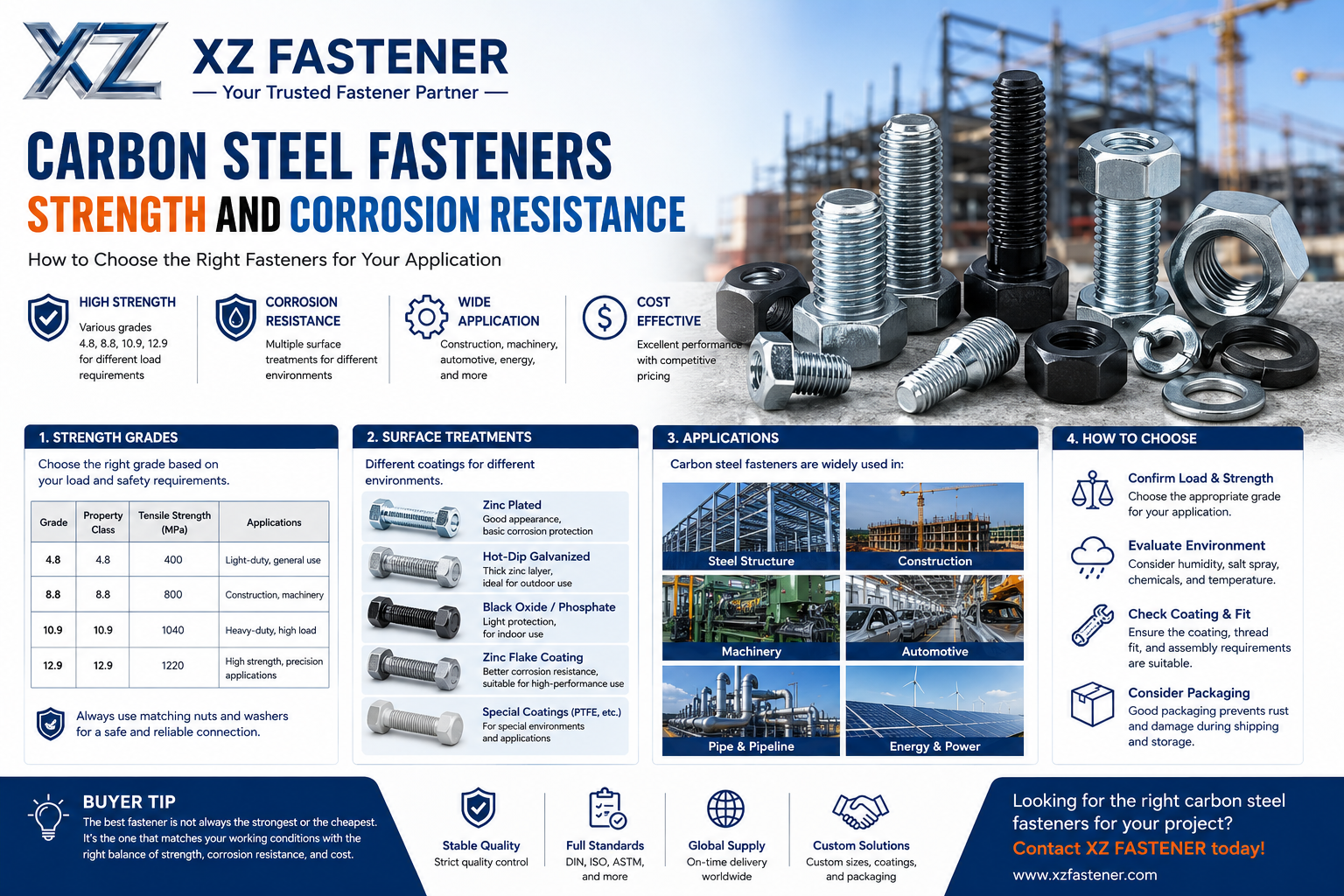
Общие классы прочности
Крепежи из углеродистой стали доступны в различных механических классах. Для метрических болтов распространенные марки включают:
- 4.8: Обычная марка прочности от низкой до средней, часто используется для сборки в легких условиях.
- 8.8: Часто используется в машиностроении, строительстве и общепромышленных проектах.
- 10.9: Более высокая прочность, подходит для более сложных механических соединений.
- 12.9: Очень высокая прочность, часто используется в прецизионном оборудовании и в приложениях с большими нагрузками, но требует осторожного использования и контроля обработки поверхности.
Для крепежа дюймовой серии или проектного крепежа покупатели также могут ознакомиться со стандартами ASTM, такими как ASTM A307, ASTM A325/F3125, ASTM A193 B7, ASTM A194 2H и родственными марками в зависимости от применения.
Ключевой момент прост: более высокая оценка не всегда означает лучшую. Болт 12.9 прочнее болта 8.8, но он может быть не лучшим выбором, если конструкция соединения, процесс нанесения покрытия или рабочая среда не подходят.
Предел прочности на разрыв и предел текучести
Два термина силы имеют наибольшее значение:
Предел прочности относится к максимальному напряжению, которое может выдержать крепеж перед разрушением.
Предел текучести относится к уровню напряжения, при котором крепеж начинает необратимо деформироваться.
Для покупателей предел текучести особенно важен, поскольку крепеж не должен растягиваться или деформироваться при нормальной эксплуатации. Если нагрузка слишком велика, соединение может ослабнуть, деформироваться или выйти из строя еще до того, как болт сломается.
При выборе крепежных изделий для конструкций или машинного оборудования правильный класс должен выбираться с учетом расчетной нагрузки, коэффициента безопасности, метода затяжки и условий работы.
Почему важно подобрать подходящие гайки и шайбы
Распространенная ошибка — покупка высокопрочных болтов, но использование неправильных гаек или шайб.
Например, высокопрочный болт следует сочетать с гайкой соответствующего класса и подходящей шайбой. Если гайка слишком мягкая, резьба может содраться. Если шайба не подходит, опорная поверхность может деформироваться или усилие затяжки может распределиться неправильно.
При больших заказах или крепежных изделиях всегда подтверждайте:
- Класс болта
- Сорт ореха
- Твердость шайбы или стандартная
- Тип резьбы
- Совместимость покрытий
- Требования к сборке
Это особенно важно для конструкционных болтов, тяжелых болтов с шестигранной головкой, анкерных болтов и крепежных изделий для машин.
Крепеж из углеродистой стали и коррозионная стойкость
Ржавеет ли углеродистая сталь?
Да. Обычная углеродистая сталь ржавеет под воздействием влаги, кислорода, соли, химикатов или внешних условий. Без защиты поверхности крепеж из углеродистой стали обычно не подходит для длительного использования на открытом воздухе.
Однако коррозионную стойкость можно улучшить путем обработки поверхности. Правильное покрытие позволяет использовать крепеж из углеродистой стали во многих внутренних, наружных и промышленных условиях.
Обычная обработка поверхности крепежа из углеродистой стали
Цинкование
Цинкование обычно используется для крепежа общего назначения из углеродистой стали. Обеспечивает базовую защиту от коррозии и чистый внешний вид. Он подходит для использования в помещении, на открытом воздухе, при сборке оборудования и общего оборудования.
Однако цинкование обычно не лучший выбор для суровых наружных, прибрежных или химических сред.
горячее оцинкование
горячее оцинкование создает более толстый слой цинка и широко используется для наружных стальных конструкций, строительных проектов, опор, кронштейнов и тяжелых соединений.
Оно обеспечивает лучшую устойчивость к коррозии, чем обычное гальваническое цинкование, но покупатели должны обратить внимание на посадку резьбы. горячеоцинкованные покрытия толще, поэтому для обеспечения плавной сборки гайкам может потребоваться соответствующий припуск.
черное оксидирование и фосфат
Покрытия из черного оксида и фосфата часто используются для улучшения внешнего вида, защиты от света или обеспечения смазывания. Они часто встречаются в деталях машин и некоторых винтах.
Но их не следует рассматривать как прочные антикоррозийные покрытия. Если крепеж будет подвергаться воздействию влаги или воздействия внешних факторов, может потребоваться дополнительная смазка, упаковка или другое покрытие.
Цинковое покрытие
Покрытия из цинковых чешуек часто используются, когда требуется лучшая коррозионная стойкость без риска водородного охрупчивания, связанного с некоторыми процессами гальваники. Они широко распространены в автомобилестроении, машиностроении и в высокопроизводительных крепежных устройствах.
Для высокопрочных крепежных изделий покрытие из чешуек цинка может быть практичным вариантом, когда важны одновременно защита от коррозии и механическая надежность.
PTFE или другие специальные покрытия
Специальные покрытия, такие как покрытия типа PTFE, могут использоваться, когда покупателям требуется защита от коррозии, контролируемое трение, химическая стойкость или более простая установка в конкретных рабочих условиях.
Они не всегда необходимы для стандартных проектов, но могут быть полезны для энергетических, трубопроводных, морских или специальных промышленных применений.
Если для вашего проекта требуется нестандартный размер, специальное покрытие, деталь на основе чертежей или упаковка, специфичная для проекта, вы можете проверить индивидуальный сервис крепежа.
Углеродистая сталь и крепеж из нержавеющей стали
Углеродистая сталь и нержавеющая сталь решают разные проблемы.
Углеродистую сталь обычно выбирают, когда покупателю нужна прочность, контроль затрат и широкая доступность. Нержавеющую сталь обычно выбирают, когда устойчивость к коррозии важнее стоимости.
Например:
Углеродистая сталь с цинковым покрытием хорошо подходит для внутреннего оборудования.
Углеродистая сталь с горячим цинкованием может хорошо подойти для стальных конструкций на открытом воздухе.
Нержавеющая сталь может быть лучше подходит для прибрежных, влажных, химических или декоративных применений, где критическая устойчивость к ржавчине имеет решающее значение.
Но нержавеющая сталь не становится автоматически прочнее. Многие крепежные детали из нержавеющей стали имеют меньшую прочность, чем болты из высокопрочной углеродистой стали. Поэтому, если ваш проект требует одновременно высокой прочности и коррозионной стойкости, вам необходимо вместе сравнить марку, покрытие, окружающую среду и эксплуатационные нагрузки.
Где подходят крепежи из углеродистой стали
Крепежи из углеродистой стали являются хорошим выбором для:
- Сборка внутреннего оборудования
- Общее строительство
- Соединения стальных конструкций
- Установка оборудования
- Кронштейны, опоры и рамы
- Сухая или умеренно влажная среда
- Наружное использование с соответствующим покрытием.
- Экономически чувствительные массовые проекты
Они особенно подходят, когда покупателю необходимы большие объемы, стабильные механические характеристики и практичная защита поверхности.
Где крепеж из углеродистой стали может не подойти
Крепежи из углеродистой стали могут быть не лучшим выбором для:
- Длительное воздействие морской воды
- Сильная кислота или химическая среда.
- Пищевое или медицинское применение
- Проекты, требующие чистого внешнего вида из нержавеющей стали
- Высококоррозионные прибрежные районы без соответствующего покрытия
- Области применения, в которых повреждение покрытия недопустимо
- Высокопрочные гальванические детали без контроля водородного охрупчивания
В этих случаях более подходящей может быть нержавеющая сталь, легированная сталь со специальным покрытием или другой инженерный материал.
Как выбрать крепеж из углеродистой стали
1. Начните с загрузки приложения
Прежде чем выбирать марку крепежа, убедитесь, что он выдержит легкую или тяжелую нагрузку, вибрацию, удар или структурную нагрузку.
Для легкой сборки может быть достаточно более низкого класса. Для машинного оборудования или конструкций могут потребоваться такие марки, как 8.8, 10.9 или марки ASTM для конкретного проекта.
Не повышайте оценку вслепую. Для более прочных крепежных деталей может потребоваться более строгий контроль при установке, правильный момент затяжки и совместимые сопрягаемые детали.
2. Подтвердите рабочую среду.
Окружающая среда решает покрытие.
Для сухого использования в помещении может быть достаточно цинкования или оксидирования.
Для наружного использования более подходящим может быть горячее оцинкование или покрытие цинковыми чешуйками.
Для прибрежных или химических сред следует тщательно сравнивать покрытия из углеродистой стали с вариантами из нержавеющей стали.
3. Проверьте резьбу и посадку узла.
Толщина покрытия влияет на посадку резьбы. Это особенно важно для горячеоцинкованного крепежа.
Если посадка резьбы слишком тугая, установка усложняется. Если посадка слишком свободная, соединение может работать неправильно. Покупатели должны подтвердить применимый стандарт и убедиться в том, что резьба гайки адаптирована к покрытию.
4. Учитывайте риск водородного охрупчивания.
Крепежные детали из высокопрочной углеродистой стали могут быть чувствительны к водородному охрупчиванию во время некоторых процессов гальваники. Этот риск более важен для более высоких классов, таких как 10.9 и 12.9.
Для критически важных применений покупатели должны обсудить метод нанесения покрытия, обработку обжигом, если применимо, и то, является ли более подходящим неэлектролитическое покрытие, такое как цинковые чешуйки.
5. Не игнорируйте упаковку
Коррозия может начаться еще до установки, если упаковка некачественная.
Для экспортных заказов хорошая упаковка должна включать подходящие картонные коробки, защиту поддонов, четкие этикетки, защиту от влаги и стабильную загрузку. Это важно при морских перевозках, складском хранении и погрузочно-разгрузочных работах на стройплощадке.
Хорошая упаковка – это не только внешний вид. Это помогает уменьшить ржавчину, недостающие детали, смешанные размеры, поврежденные коробки и споры при получении.
Распространенные ошибки при покупке
Ошибка 1: покупать только по размеру
«Болт M12 x 50» недостаточно информации. Покупатели также должны подтвердить марку, стандарт, качество поверхности, тип резьбы, тип головки, количество, упаковку и применение.
Ошибка 2: выбор самого дешевого покрытия
Недорогое покрытие может выглядеть приемлемым при доставке, но быстро выйти из строя во влажной среде или на открытом воздухе. Правильное покрытие должно соответствовать реальному рабочему состоянию, а не только целевой цене.
Ошибка 3: игнорирование гайки и шайбы
Болт, гайка и шайба работают как одна крепежная система. Если одна часть неисправна, все соединение может выйти из строя.
Ошибка 4: Использование высокой прочности без контроля установки
Высокопрочные болты требуют правильной затяжки, совместимых деталей и иногда специального обращения. Чрезмерная затяжка, неправильный момент затяжки или неподходящее покрытие могут создать проблемы.
Ошибка 5: не запрашивать документы, когда они необходимы
Для проектных заказов покупателям могут потребоваться сертификаты материалов, отчеты об инспекциях, упаковочные листы, фотографии или документы о соответствии. Это должно быть подтверждено до производства или отгрузки, а не после прибытия товара.
Чтобы понять историю поставщика перед размещением заказа, вы можете посетить О нас страница.
Практические советы по закупкам
Если вы покупаете крепеж из углеродистой стали для экспорта, использования в проектах или распространения, подготовьте следующую информацию, прежде чем запросить предложение:
- Название продукта
- Стандарт, например DIN, ISO, ASTM, или требования к чертежу.
- Размер и резьба
- Материал или класс прочности
- Обработка поверхности
- Количество
- Требования к упаковке
- Приложение или рабочая среда
- Страна назначения или порт
- Требования к документу
Это помогает поставщику более точно оценивать цену и избегать повторных обращений.
Если вы не уверены, какой сорт или покрытие вам подходит, четко опишите среду вашего применения. Например, «наружная стальная конструкция недалеко от побережья» гораздо полезнее, чем просто сказать «антикоррозионные болты».
Для технического подтверждения или поддержки котировок вы можете связаться с командой через XZ FASTENER Свяжитесь с нами.
Ключевые выводы
- Крепежи из углеродистой стали прочны, экономичны и широко используются, но для них требуется правильный сорт и покрытие.
- Класс прочности следует выбирать в соответствии с нагрузкой, применением и подходящими гайками и шайбами, а не просто выбирать самый высокий класс.
- Углеродистая сталь может ржаветь, но цинкование, горячее оцинкование, цинк-ламельное покрытие, фосфат, черное оксидирование и специальные покрытия могут улучшить коррозионную стойкость в различных средах.
- Для наружных, прибрежных или химических сред выбор покрытия так же важен, как и прочность крепежа.
- Покупатели должны подтвердить стандарты, класс, покрытие, посадку резьбы, упаковку и документы перед размещением оптовых или проектных заказов.
Часто задаваемые вопросы
Являются ли крепления из углеродистой стали прочнее, чем крепления из нержавеющей стали?
Во многих случаях крепеж из высокопрочной углеродистой стали прочнее обычного крепежа из нержавеющей стали. Однако нержавеющая сталь обычно более устойчива к коррозии. Лучший выбор зависит от того, требуется ли вашему проекту более высокая механическая прочность, лучшая устойчивость к ржавчине или и то, и другое.
Всегда ли крепеж из углеродистой стали нуждается в покрытии?
Если крепеж подвергается воздействию влаги, наружного воздуха или длительного хранения, настоятельно рекомендуется нанести покрытие. Обычная углеродистая сталь без защиты может быстро заржаветь. Для использования в сухих помещениях в зависимости от применения могут быть приемлемыми крепежные детали без покрытия или с легким покрытием.
Какое покрытие лучше всего подходит для крепежа из углеродистой стали на открытом воздухе?
горячее оцинкование обычно используется для наружных стальных конструкций и строительных проектов. Покрытие из цинковых чешуек также может подойти для высокопроизводительных или автомобильных применений. Выбор лучшего покрытия зависит от уровня воздействия, способа установки, требований к внешнему виду и класса прочности крепежа.
Можно ли оцинковывать крепеж из высокопрочной углеродистой стали?
Да, это возможно, но высокопрочные крепежные детали требуют большей осторожности, поскольку некоторые процессы гальваники могут создать риск водородного охрупчивания. Для критически важных деталей покупатели должны обсудить процесс нанесения покрытия, последующую обработку и возможные альтернативы, такие как покрытие цинковыми чешуйками.
Какую информацию я должен предоставить при покупке крепежа из углеродистой стали?
Вы должны указать размер, стандарт, сорт, покрытие, количество, требования к упаковке, применение и пункт назначения. Если это нестандартная деталь, предоставьте рисунок или образец фотографии. Четкая информация помогает избежать неверных расценок и производственных ошибок.
Заключение
Крепежи из углеродистой стали являются практичным выбором, когда покупателям нужна надежная прочность, разумная стоимость и широкая доступность продукции. Но их эффективность зависит от правильного выбора. Крепеж, который хорошо работает в помещении, может выйти из строя на открытом воздухе, если покрытие неправильное. Высокопрочный болт может оказаться небезопасным, если гайка, шайба или метод установки не подходят.
При общепромышленном и строительном использовании начните с подтверждения требований к нагрузке и рабочей среды. Затем выберите подходящий класс прочности, покрытие, посадку резьбы и упаковку. Если коррозия является серьезной проблемой, не сравнивайте только стоимость материалов. Сравните все условия эксплуатации, включая влажность, соль, химикаты, время хранения и ожидаемое техническое обслуживание.
Лучшим решением о покупке не всегда является самый прочный или самый дешевый крепеж. Это крепеж, который соответствует реальным условиям работы вашего проекта и имеет правильный баланс прочности, коррозионной стойкости, стоимости и надежности поставок.
 English
  Español
  Français
  Español de México
  العربية
  Deutsch
  Русский
  Tiếng Việt
  Bahasa Indonesia
  Italiano
  简体中文
简体中文