
Введение
Выбор правильного шестигранного болта – это не только соответствие диаметра и длины. Для промышленных покупателей, дистрибьюторов, подрядчиков и производителей оборудования реальный вопрос заключается в следующем: Какой размер, марка, материал, покрытие и метод установки шестигранного болта обеспечат безопасность, стабильность и экономичность соединения?
В этом руководстве объясняется, как понимать размеры болтов с шестигранной головкой, сравнивать распространенные марки, выбирать подходящие материалы и обработку поверхности, а также избегать ошибок при установке, которые могут привести к ослаблению, повреждению резьбы, коррозии или разрушению соединения. Если вы ищете болты с шестигранной головкой для строительства, машиностроения, стальных конструкций, сборки оборудования или проектов технического обслуживания, эта статья поможет вам принять более четкое решение о покупке.
Основное содержание
Что такое шестигранный болт?
Болт с шестигранной головкой представляет собой крепежный элемент с внешней резьбой и шестигранной головкой. Обычно его затягивают гаечным ключом или головкой и обычно используют вместе с гайкой, шайбой или резьбовым отверстием для скрепления двух или более деталей вместе.
Болты с шестигранной головкой широко используются, поскольку шестигранная головка обеспечивает хорошее зацепление инструмента, большую силу затяжки и простоту установки в полевых или мастерских условиях. По сравнению с винтами, используемыми для легкой сборки, болты с шестигранной головкой больше подходят для соединений средней и высокой нагрузки, где важны прочность, соосность и надежность эксплуатации.
В международной торговле термин «болт с шестигранной головкой» может охватывать несколько аналогичных продуктов, в том числе:
| Тип продукта | Общий стандартный справочник | Основная особенность |
|---|---|---|
| Болт с шестигранной головкой, частичная резьба | DIN 931 / ISO 4014 | Хвостовик без резьбы под головкой, подходит для более прочных секций, выдерживающих сдвиг. |
| Винт с шестигранной головкой, полная резьба | DIN 933 / ISO 4017 | Резьба проходит близко к головке, что полезно, когда требуется полное зацепление резьбы. |
| Тяжелый шестигранный конструкционный болт | ASTM / структурные стандарты | Требования к большему напору и более сильным структурным соединениям |
| Шестигранный болт из нержавеющей стали | DIN / ISO / пользовательские стандарты | Используется там, где коррозионная стойкость важнее высокой прочности на разрыв. |
На практике покупателям не следует полагаться только на название продукта. Перед заказом всегда уточняйте требования к стандарту, типу резьбы, марке, материалу, качеству поверхности и размерам.
Как читать размеры шестигранных болтов
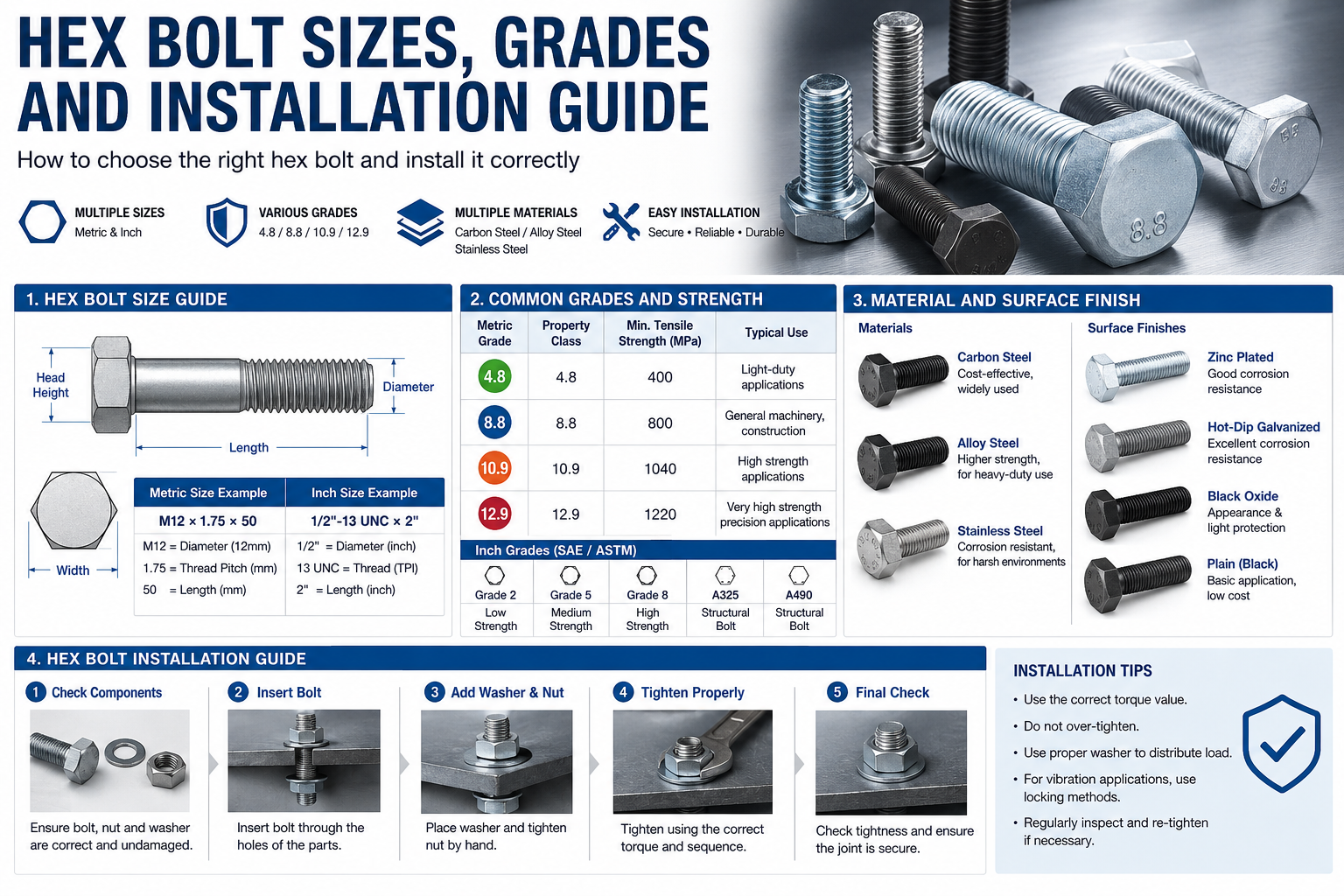
Описания размеров шестигранных болтов обычно включают три основных элемента: диаметр, шаг резьбы и длина.
Для метрических болтов типичный размер можно записать как:
M12 × 1.75 × 50 mm
Это означает:
- M12: номинальный диаметр резьбы 12 mm
- 1.75: шаг резьбы 1.75 mm
- 50 mm: длина болта измеряется от под головки до конца болта.
Для дюймовых болтов типичный размер можно записать как:
1/2″-13 UNC × 2″
Это означает:
- 1/2″: номинальный диаметр
- 13 UNC: 13 ниток на дюйм, грубая резьба
- 2″: длина болта
При покупке болтов с шестигранной головкой необходимо подтвердить следующие размеры:
| Размерность | Почему это важно |
| Диаметр | Определяет размер отверстия, грузоподъемность, совместимость гаек и выбор шайбы. |
| Длина | Должен обеспечивать достаточное зацепление резьбы без достижения дна. |
| Шаг резьбы | Должно точно соответствовать гайке или резьбовому отверстию. |
| Длина резьбы | Влияет на зажим, длину захвата и открытое положение резьбы. |
| Размер головы | Определяет размер ключа/гнезда и установочный зазор. |
| Длина хвостовика | Важен для сдвигающей нагрузки и выравнивания в соединениях конструкций или машин. |
Распространенной ошибкой является подтверждение только «M12 × 50» без подтверждения того, имеет ли болт полную или частичную резьбу. Для многих проектов эта разница напрямую влияет на производительность установки.
Полная или неполная резьба: какой выбрать?
Одним из наиболее практичных решений при покупке болтов с шестигранной головкой является выбор между полной и частичной резьбой.
Полнорезьбовые шестигранные болты
Шестигранные болты с полной резьбой имеют резьбу, идущую почти по всему валу. Они обычно используются, когда болт нуждается в гибкой регулировке или когда соединение требует зацепления резьбы на большей части длины болта.
Они подходят для:
- Тонкая пластина в сборе
- Общее крепление машин
- Регулируемые соединения
- Области применения, где длина захвата короткая
- Упрощение инвентаризации для дистрибьюторов
Однако болты с полной резьбой могут быть не лучшим выбором там, где ожидается, что тело болта будет выдерживать высокие срезывающие нагрузки, поскольку резьбовая часть имеет меньшее эффективное поперечное сечение, чем гладкий хвостовик.
Болты с частичной резьбой и шестигранной головкой
Болты с частичной резьбой имеют гладкий стержень под головкой и резьбу на конце. Хвостовик без резьбы может обеспечить лучшее выравнивание и сопротивление сдвигу при прохождении через соединяемые детали.
Они подходят для:
- Соединения стальных конструкций
- Рамы машин
- Сборка тяжелого оборудования
- Соединения с увеличенной длиной захвата
- Области применения, где важна сдвиговая нагрузка
Ключевым моментом является выбор длины, при которой гладкий хвостовик будет располагаться внутри соединения, а снаружи останется достаточно резьбы для правильного зацепления гайки.
Распространенные марки болтов с шестигранной головкой и что они означают
Марка болта с шестигранной головкой указывает на механическую прочность. Правильная марка зависит от нагрузки, конструкции соединения, условий труда и требований безопасности.
Метрические марки болтов с шестигранной головкой
Общие классы свойств метрики включают 4.8, 8.8, 10.9 и 12.9.
| Оценка | Общее значение | Типичное использование |
| 4.8 | Углеродистая сталь низкой и средней прочности | Легкая сборка, некритическое крепление |
| 8.8 | Средне-высокая прочность | Машиностроение, строительство, монтаж оборудования |
| 10.9 | Высокопрочная легированная сталь | Автомобильная промышленность, тяжелая техника, соединения с высокими нагрузками |
| 12.9 | Легированная сталь очень высокой прочности | Применение высоконагруженных машин и прецизионного оборудования |
Марка 8.8 является одним из наиболее часто используемых вариантов для промышленных проектов, поскольку она предлагает практический баланс между прочностью, доступностью и стоимостью. Марки 10.9 и 12.9 не следует выбирать только потому, что они «более прочные». Более прочные болты могут потребовать более строгого контроля при установке, подходящих ответных гаек, правильных шайб и тщательного учета хрупкости, процесса нанесения покрытия и условий работы.
Марки дюймовых болтов с шестигранной головкой
Для дюймовых крепежей покупатели могут увидеть такие классы, как класс 2, класс 5, класс 8, ASTM A307, ASTM A325, ASTM A490 и соответствующие спецификации конструкционных болтов.
Для соединений конструкционной стали не заменяйте конструкционные болты обычными шестигранными болтами, если это не одобрено инженером проекта. К конструкционным болтам часто предъявляются особые требования к прочности, размерам, маркировке головки, шайбам, гайкам, покрытию и методу установки.
Выбор материала: углеродистая сталь, легированная сталь или нержавеющая сталь?
Выбор материала должен основываться как на прочности, так и на условиях окружающей среды.
Болты с шестигранной головкой из углеродистой стали
Болты с шестигранной головкой из углеродистой стали экономически эффективны и подходят для общего строительства, машиностроения, мебели, кронштейнов и некоррозионного применения внутри помещений. Они часто поставляются с цинковым покрытием, черным оксидом, черным фосфатом или горячим цинкованием в зависимости от требований к коррозии.
Выбирайте углеродистую сталь, если:
- Контроль затрат важен
- Окружающая среда сухая или умеренно агрессивная.
- Требуются марки с высокой прочностью на разрыв, такие как 8.8 или 10.9.
- Проект допускает нанесение защитных покрытий
Болты с шестигранной головкой из легированной стали
Легированная сталь обычно используется для изготовления высокопрочных марок, таких как 10.9 и 12.9. Он подходит для требовательных применений, где требуется более высокая прочность на разрыв и контролируемые механические свойства.
Выбирайте легированную сталь, если:
- Соединение имеет высокую механическую нагрузку
- Для проекта требуется класс 10.9 или 12.9.
- Прочность важнее коррозионной стойкости
- Момент установки и соответствующие компоненты можно правильно контролировать.
Болты с шестигранной головкой из нержавеющей стали
Болты с шестигранной головкой из нержавеющей стали используются, когда коррозионная стойкость важнее высокой прочности на разрыв. К распространенным материалам из нержавеющей стали относятся A2 / 304 и A4 / 316.
Выбирайте нержавеющую сталь, если:
- Окружающая среда влажная, открытая, морская или подвержена химическому воздействию.
- Внешний вид и коррозионная стойкость имеют значение.
- Применение не требует использования углеродистых сталей высокопрочных марок.
- Стоимость долгосрочного обслуживания важнее первоначальной цены
Распространенное заблуждение состоит в том, что нержавеющая сталь всегда прочнее углеродистой стали. Во многих случаях нержавеющая сталь обеспечивает лучшую коррозионную стойкость, но меньшую прочность на разрыв, чем болты из высококачественной легированной стали.
покрытие поверхности и покрытие: больше, чем внешний вид
Качество поверхности влияет на коррозионную стойкость, трение, поведение при установке и срок службы.
| Поверхностная обработка | Основное преимущество | Подходящее использование |
| Однотонный/черный | Низкая стоимость, базовая защита. | Сухие помещения в помещении |
| Оцинкованный | Экономичная коррозионная стойкость | Общее оборудование и машины |
| Желтый цинк | Похожая защита с разным внешним видом | Общее крепление и стоковые изделия |
| черное оксидирование | Внешний вид и светозащита | Машины для внутреннего использования |
| Горячая оцинковка | Улучшенная стойкость к коррозии на открытом воздухе | Строительство, стальная конструкция, наружные проекты |
| PTFE / Покрытие типа ксилана | Улучшенный контроль коррозии и трения | Масло & газ, фланец, химическая среда |
| Натуральная покрытие из нержавеющей стали | Коррозионная стойкость самого материала | Морское, наружное, пищевое оборудование, химическое воздействие |
При выборе болтов из горячеоцинкованной стали покупатели должны обратить внимание на посадку резьбы. Для более толстого покрытия могут потребоваться совместимые гайки и соответствующий припуск на резьбу. Использование обычных гаек с горячеоцинкованными болтами может вызвать проблемы при сборке.
Как выбрать правильный размер шестигранного болта
Практический процесс выбора следует начинать с соединения, а не с каталога болтов.
1. Подтвердите тип нагрузки.
Спросите, выдерживает ли болт преимущественно растягивающую нагрузку, сдвиговую нагрузку, вибрацию или зажимную силу. Для простого зажима хорошо подойдет болт с полной резьбой. Для соединений, несущих сдвиг, лучше использовать болт с частичной резьбой и гладким хвостовиком, проходящим через соединение.
2. Проверьте отверстие и длину ручки.
Болт должен проходить через соединяемые детали на длину, достаточную для зацепления шайбы и гайки. Если болт слишком короткий, зацепление резьбы будет недостаточным. Если она слишком длинная, лишняя открытая резьба может помешать установке или увеличить стоимость.
3. Подберите гайку и шайбу.
Класс болта должен соответствовать классу гайки. Например, высокопрочные болты не следует сочетать с низкопрочными гайками. Шайбы также должны подходить по диаметру, марке, покрытию и применению болта.
4. Выбирайте покрытие в зависимости от окружающей среды.
Для сухих помещений внутри помещений может потребоваться только цинкование или чернение. Наружные стальные конструкции могут потребовать горячего цинкования. Морская или химическая среда может потребовать использования нержавеющей стали или специальных покрытий.
5. Подтвердите стандарт и допуск.
Для замены, обслуживания и поставки проекта подтвердите, требуются ли покупателю DIN, ISO, ASTM, ASME или пользовательские чертежи. Болты одинакового вида не могут быть взаимозаменяемыми, если размеры головки, длина резьбы или требования к допускам различаются.
Если вы не уверены, какой стандарт или класс подходит для вашего проекта, вы можете просмотреть доступные варианты крепежа на нашем сайте. страница продуктов или отправьте чертежи и спецификации через наш страница контактов.
Руководство по установке: Как правильно установить шестигранные болты
Правильная установка так же важна, как и правильный выбор изделия. Высококачественный болт все равно может выйти из строя, если он перетянут или недостаточно затянут, имеет перекрёстную резьбу или установлен с неподходящими компонентами.
Шаг 1. Проверьте болт, гайку и шайбу перед установкой.
Перед установкой подтвердите:
- Размер болта и маркировка класса
- Совместимость с маркой гаек и резьбой
- Размер и твердость шайбы
- Состояние покрытия
- Чистота резьбы
- Отсутствие видимых трещин, деформаций и поврежденной резьбы.
Не вставляйте болт в гайку или резьбовое отверстие с силой. Если в начале резьба вручную движется неравномерно, остановитесь и проверьте шаг резьбы, толщину покрытия или наличие повреждений резьбы.
Шаг 2. Используйте подходящую шайбу
Шайбы помогают распределить нагрузку, защитить контактную поверхность и улучшить стабильность соединения. Для отверстий с прорезями, мягких материалов или поверхностей с покрытием выбор шайбы становится более важным.
Для структурных или высокопрочных соединений используйте шайбу того типа, который требуется в соответствии с проектной спецификацией. Не заменяйте случайно закаленные шайбы обычными плоскими шайбами.
Шаг 3. Затягивайте в правильной последовательности.
В случае многоболтовых соединений затягивайте болты постепенно и равномерно. Не затягивайте полностью один болт, пока остальные остаются ослабленными. Неравномерная затяжка может привести к перекосу, деформации поверхности или неравномерной предварительной нагрузке.
Для фланцев, накладок или соединений машин перекрестная или поэтапная затяжка обычно безопаснее, чем затяжка по кругу с одной стороны.
Шаг 4: Тщательно контролируйте крутящий момент
Крутящий момент используется для создания преднатяга, но на значение крутящего момента влияют состояние резьбы, смазка, покрытие, поверхность шайбы и точность инструмента. Сухой оцинкованный болт и болт со смазанным покрытием могут создавать совершенно разную предварительную нагрузку при одном и том же крутящем моменте.
Для критически важных применений используйте значение крутящего момента, указанное инженером проекта, производителем оборудования или утвержденным стандартом. Не полагайтесь на случайную онлайн-таблицу крутящих моментов для конструктивных, подъемных, напорных или критических с точки зрения безопасности соединений.
Шаг 5. Не допускайте ослабления там, где существует вибрация.
В вибрирующем оборудовании обычные гайки со временем могут ослабнуть. В зависимости от применения вам может понадобиться:
- Пружинные шайбы
- Контргайки
- Двойные гайки
- Клей для фиксации резьбы
- Шайбы клиновые стопорные
- Фланцевые гайки
- Правильный контроль предварительной нагрузки
Лучший метод предотвращения ослабления зависит от уровня вибрации, температуры, доступа для обслуживания и необходимости разборки соединения в будущем.
Распространенные ошибки, которых следует избегать покупателям
Ошибка 1: Выбор только по цене
Более дешевый болт может стоить дороже, если это приведет к задержке установки, повреждению покрытия, несоответствию резьбы или ранней замене. Для промышленных заказов сначала подтвердите реальную потребность, а затем сравните цену, основанную на том же стандарте, классе, материале и покрытии.
Ошибка 2. Замена 8.8 на 4.8 без согласования.
Болты марок 4.8 и 8.8 могут выглядеть одинаково, но их механические характеристики различаются. Замена болта более высокого класса на болт более низкого класса может создать серьезную угрозу безопасности в несущих конструкциях.
Ошибка 3: полагать, что нержавеющая сталь означает высокую прочность
Нержавеющую сталь выбирают главным образом из-за коррозионной стойкости. Если применение требует высокой прочности на разрыв, более подходящими могут быть марки углеродистой или легированной стали.
Ошибка 4: игнорирование шага резьбы
Метрическая крупная и мелкая резьба или резьбы UNC и UNF не являются взаимозаменяемыми. Небольшая ошибка шага резьбы может привести всю партию в негодность.
Ошибка 5: неподтверждение полной или частичной резьбы
Для некоторых размеров могут быть доступны версии как с полной, так и с частичной резьбой. Если для проекта требуется гладкий хвостовик, выдерживающий сдвиговую нагрузку, болт с полной резьбой может не подойти.
Практический контрольный список покупки болтов с шестигранной головкой
Прежде чем разместить оптовый заказ, подтвердите следующие данные:
| Элемент для подтверждения | Пример |
| Стандарт продукта | DIN 931, DIN 933, ISO 4014, ISO 4017, ASTM, ASME |
| Размер | M12 × 50, 1/2″-13 × 2″ |
| Тип резьбы | Метрическая грубая, метрическая мелкая, UNC, UNF |
| Форма резьбы | Полная резьба или частичная резьба |
| Материал | Углеродистая сталь, легированная сталь, нержавеющая сталь 304 / 316 |
| Оценка | 4.8, 8.8, 10.9, 12.9, A2-70, A4-80, класс 5, класс 8 |
| Чистота поверхности | Оцинкованный, оксидированный, HDG, PTFE, гладкий |
| Соответствующие детали | Гайка, шайба, пружинная шайба, плоская шайба |
| Количество и упаковка | Массовая коробка, небольшая коробка, поддон, индивидуальная упаковка |
| Документы | MTC, отчет об инспекции, сертификат при необходимости. |
| Приложение | Строительство, техника, стальные конструкции, морское судоходство, техническое обслуживание |
Для нестандартной длины, специального покрытия, маркировки головки, упаковки или производства на основе чертежей вы можете проверить наш индивидуальное обслуживание. Чтобы узнать больше о наших возможностях поставок крепежных изделий и поддержке экспорта, посетите наш страница о нас.
Ключевые выводы
- Размер шестигранного болта – это не только диаметр и длина. Шаг резьбы, длина резьбы, размер головки, длина хвостовика и соответствующая гайка/шайба — все это влияет на посадку и производительность.
- Полная и частичная резьба используются для разных целей. Болты с полной резьбой удобны для общей сборки, тогда как болты с частичной резьбой часто лучше подходят там, где имеют значение длина захвата и срезающая нагрузка.
- Высшая оценка не всегда лучше. Болты класса 10.9 или 12.9 требуют соответствующих соответствующих компонентов и контроля установки. Для многих общепромышленных применений марка 8.8 является практичным и широко используемым выбором.
- Материал и покрытие должны соответствовать окружающей среде. Углеродистая сталь экономически эффективна, легированная сталь обеспечивает более высокую прочность, а нержавеющая сталь лучше устойчива к коррозии.
- Момент затяжки необходимо тщательно контролировать. Крутящий момент зависит от покрытия, смазки, состояния резьбы и конструкции соединения. Критически важные приложения должны соответствовать утвержденным техническим требованиям.
Часто задаваемые вопросы
1. В чем разница между шестигранными болтами DIN 931 и DIN 933?
DIN 931 обычно относится к болтам с шестигранной головкой с частичной резьбой, а DIN 933 обычно относится к винтам или болтам с шестигранной головкой с полной резьбой. Если для вашего применения требуется гладкий хвостовик внутри соединения, более подходящим может оказаться DIN 931. Если вам нужна резьба по большей части болта, лучше подойдет DIN 933.
2. Достаточно ли прочный шестигранный болт марки 8.8 для строительства?
Марка 8.8 обычно используется в строительстве и машиностроении, но ее пригодность зависит от проекта, нагрузки, стандартов и метода установки. Для соединений конструкционной стали всегда следуйте требуемым спецификациям конструкционных болтов и одобрению инженера.
3. Какой вариант выбрать: оцинкованные или горячеоцинкованные шестигранные болты?
Оцинкованные болты подходят для использования в обычных помещениях или в средах с умеренной коррозией. Болты, оцинкованные горячим способом, больше подходят для наружного строительства и стальных конструкций, где требуется более высокая коррозионная стойкость. Однако покрытие HDG толще, поэтому необходимо проверить совместимость гаек и посадку резьбы.
4. Могут ли шестигранные болты из нержавеющей стали заменить болты из высокопрочной углеродистой стали?
Не всегда. Нержавеющая сталь обеспечивает лучшую коррозионную стойкость, но может не обеспечивать такую же прочность на разрыв, как болты из высококачественной углеродистой или легированной стали. Если применение критично к нагрузке, перед заменой подтвердите требуемый класс прочности.
5. Как избежать покупки неправильных шестигранных болтов?
Предоставьте поставщику стандарт, размер, шаг резьбы, марку, материал, покрытие, требования к полной или частичной резьбе, количество, применение, а также любые чертежи или фотографии. Для поставки проекта также подтвердите необходимые документы, такие как сертификаты на материалы или отчеты об инспекциях.
Заключение
Правильный болт с шестигранной головкой следует выбирать исходя из всего соединения, а не только из названия продукта. Размер, марка, материал, покрытие, тип резьбы и метод установки — все это влияет на конечные характеристики соединения.
Для общего машиностроения и строительства практичной отправной точкой часто являются оцинкованные шестигранные болты из углеродистой стали марки 8.8. Для более высоких нагрузок могут потребоваться класс 10.9 или характеристики конструкционных болтов. Для наружных, морских или агрессивных сред следует рассмотреть варианты из горячеоцинкованной или нержавеющей стали. Для нестандартного оборудования, запасных частей или проектов на основе чертежей перед началом производства подтвердите все размеры и требования к производительности.
Если вам нужна помощь в выборе правильного размера, класса, покрытия или метода упаковки шестигранного болта для вашего заказа, вы можете просмотреть наш крепежные изделия или отправьте свои требования через наш свяжитесь с нами страница. Четкая спецификация в начале может предотвратить неправильные покупки, проблемы с установкой и ненужные задержки проекта.
 English
  Español
  Français
  Español de México
  العربية
  Deutsch
  Русский
  Tiếng Việt
  Bahasa Indonesia
  Italiano
  简体中文
简体中文