
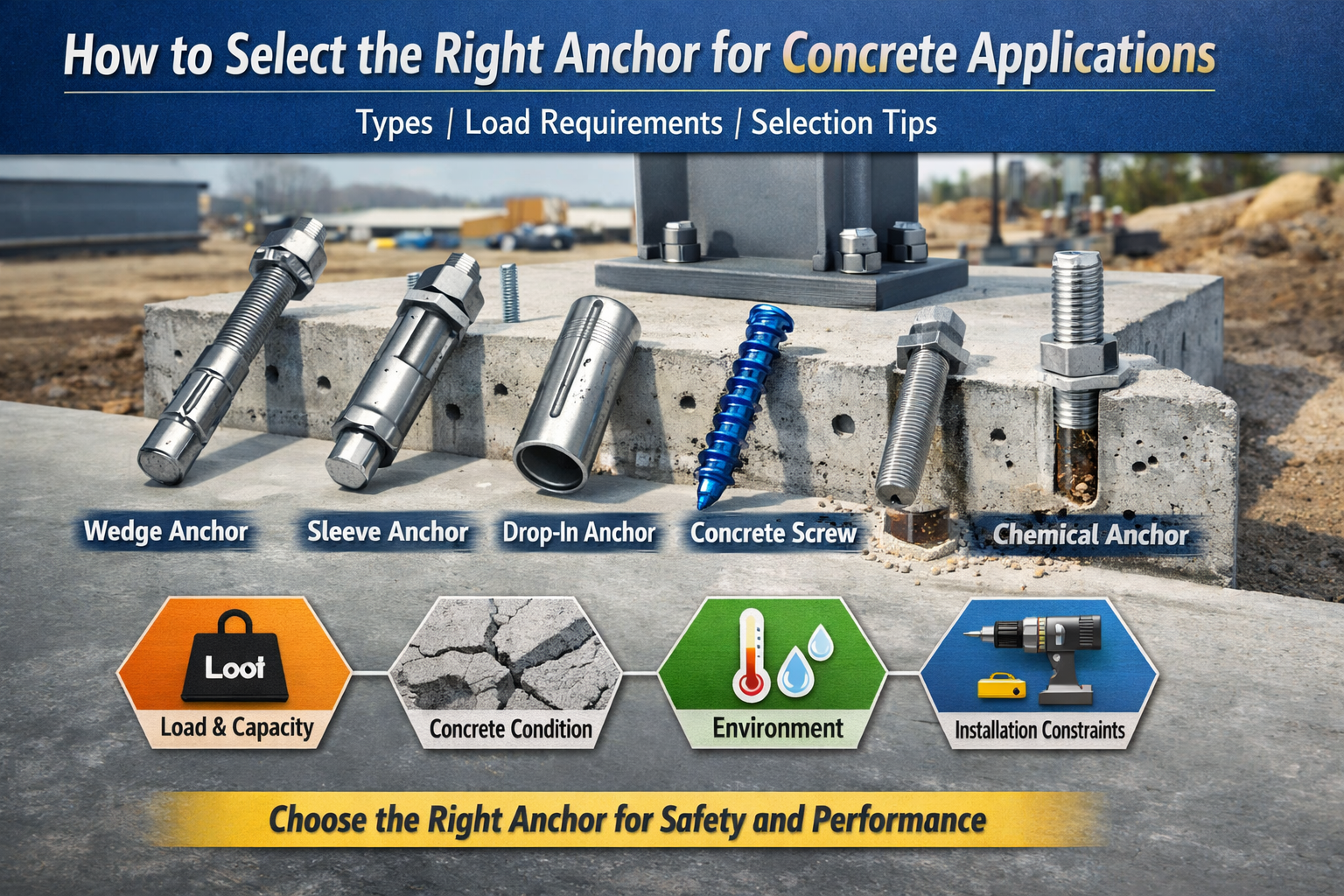
Что такое бетонный анкер и для чего он нужен?
Анкер для бетона — это крепежное устройство, используемое для крепления структурных или ненесущих компонентов к бетону. В отличие от стандартных болтов, в которых используется только резьба, анкеры предназначены для передачи нагрузки на бетон посредством расширения, сцепления или механической блокировки.
Общие примеры привязанных компонентов включают в себя:
- Стальные колонны
- Машинные базы
- Ограждения и барьеры безопасности
- HVAC оборудование
- Кабельные лотки и опоры для труб
- Солнечные монтажные конструкции
Бетонные анкеры должны противостоять нескольким типам сил:
- Растягивающая нагрузка – тянущая сила, пытающаяся вытащить якорь
- Сдвиговая нагрузка – боковая сила, действующая на якорь
- Комбинированная нагрузка – растяжение и сдвиг, действующие одновременно
- Динамическая нагрузка – вибрация или повторяющееся движение
Поскольку бетон прочен при сжатии, но относительно слаб при растяжении, при проектировании анкеров основное внимание уделяется безопасному распределению этих сил на основной материал.
Распространенные типы бетона Якоря
Понимание типов якорей — это первый шаг к выбору правильного.
1. Клиновые анкеры
Клиновые анкеры являются одними из наиболее широко используемых механических анкеров для твердого бетона.
Как они работают:
Клиновой зажим прижимается к бетону при затягивании гайки, создавая сильное трение и механическую блокировку.
Типичные применения
- Соединения стальных конструкций
- Установка оборудования
- Монтаж для тяжелых условий эксплуатации
Преимущества
- Высокая грузоподъемность
- Надежность в твердом бетоне
- Простая установка
Ограничения
- Не подходит для растрескавшегося или слабого бетона, если не указано иное.
- Не подлежит повторному использованию после удаления.
2. Анкеры рукавов
В анкерах с втулкой используется втулка, которая при затягивании расширяется по длине анкера.
Типичные применения
- Светильники средней мощности
- Поручни
- Электрооборудование
- Легкая техника
Преимущества
- Может работать с несколькими базовыми материалами (бетон, кирпич, блоки)
- Простая установка
Ограничения
- Меньшая несущая способность по сравнению с клиновыми анкерами.
3. Вставные якоря
Вставные анкеры — это анкеры с внутренней резьбой, устанавливаемые заподлицо с бетонной поверхностью.
Типичные применения
- Подвесные трубопроводы
- HVAC установки
- Крепление резьбового стержня
Преимущества
- Установка заподлицо
- Чистый внешний вид
- Идеально подходит для подвесной установки
Ограничения
- Требуется инструмент настройки
- Работает только в твердом бетоне.
4. Бетонные винтовые анкеры
Саморезы по бетону нарезают резьбу непосредственно в бетоне во время установки.
Типичные применения
- Временные установки
- Кронштейны для оборудования
- Легкие конструктивные элементы
Преимущества
- Быстрая установка
- Съемный и в некоторых случаях многоразовый
- Отсутствие напряжения расширения бетона
Ограничения
- Умеренная грузоподъемность
- Качество отверстий имеет решающее значение
5. Химические (клеевые) анкеры.
Химические анкеры основаны на эпоксидной смоле или смоле для приклеивания резьбовых стержней или арматуры в просверленные отверстия.
Типичные применения
- Тяжелые структурные нагрузки
- Сейсмические зоны
- Соединения арматуры после установки
Преимущества
- Чрезвычайно высокая грузоподъемность
- Хорошо работает в растрескавшемся бетоне.
- Гибкая глубина установки
Ограничения
- Установка требует надлежащего времени отверждения.
- Чувствителен к очистке отверстий и температуре
Ключевые факторы при выборе анкера для бетона
Выбор правильного анкера – это нечто большее, чем просто выбор диаметра. Следующие факторы определяют, будет ли якорь работать безопасно.
1. Требования к нагрузке
Начните с определения фактической нагрузки, приложенной к анкеру.
Ключевые вопросы включают в себя:
- Является ли нагрузка напряжение, срезать, or комбинированный?
- Является ли нагрузка статический or динамичный?
- Что такое коэффициент безопасности требуется проектом?
Тяжелые структурные нагрузки обычно требуют:
- клиновые анкеры
- химические анкеры
- сверхпрочные механические анкеры
В более легких установках могут использоваться:
- рукавные анкеры
- бетонные винты
2. Прочность и состояние бетона
Анкеры для бетона работают по-разному в зависимости от материала основания.
Важные переменные включают в себя:
- Прочность бетона на сжатие
- Бетон с трещинами и без трещин
- Расстояние до края
- Расстояние между анкерами
Например:
- Механические анкеры вблизи краев могут вызвать растрескивание бетона.
- Химические анкеры часто работают лучше, когда анкеры необходимо устанавливать близко к краям.
3. Среда установки
Условия окружающей среды влияют на долгосрочную надежность якоря.
Рассмотрим:
- Внутренняя и наружная установка
- Воздействие влаги
- Химическое воздействие
- Морская или прибрежная среда
- Колебания температуры
Для агрессивных сред анкеры из нержавеющей стали (например, A4 нержавеющая сталь) часто требуются.
4. Ограничения при установке
Реальные условия установки часто влияют на выбор анкера больше, чем грузоподъемность.
Ключевые соображения включают в себя:
- Доступная глубина сверления
- Накладная установка
- Ограниченное пространство для установки
- Необходимость съемных анкеров
- Скорость установки на крупных проектах
Например:
- Шурупы для бетона часто используются, когда требуется быстрый монтаж.
- Вставные анкеры идеально подходят для систем навесных стержней с резьбой.
5. Сертификация и стандарты
Во многих структурных проектах анкеры должны соответствовать признанным стандартам.
Общие ссылки включают:
- Одобрения ICC (Северная Америка)
- Одобрения ETA (Европа)
- Сейсмические рейтинги
- Классы огнестойкости
Всегда проверяйте, что тип анкера одобрен для предполагаемого использования в конструкции.
Распространенные ошибки при выборе анкеров для бетона
Даже опытные монтажники иногда упускают из виду важные детали.
Игнорирование расстояния до края
Установка анкеров слишком близко к краю бетона может привести к растрескиванию или поломке.
Выбор только по диаметру
Два анкера одинакового диаметра могут иметь разную грузоподъемность в зависимости от конструкции.
Плохая подготовка лунки
Пыль или мусор, оставшиеся в просверленных отверстиях, значительно снижают эффективность химических анкеров.
Использование углеродистой стали в агрессивных средах
Коррозия является одной из наиболее частых долгосрочных причин выхода из строя анкеров.
Пример практического выбора
Рассмотрим типичную промышленную установку:
Сценарий: Крепление тяжелого стального основания оборудования к железобетонному перекрытию.
Ключевые требования:
- Высокие растягивающие и сдвиговые нагрузки
- Постоянная установка
- Внутренняя среда
Подходящие варианты могут включать в себя:
- Клиновые анкеры для быстрого механического монтажа
- Химические анкеры, если требуется более высокая несущая способность или меньшее расстояние между краями.
Этот тип оценки помогает логически сузить выбор якорей, а не выбирать вслепую.
Ключевые выводы
- Бетонные анкеры передают нагрузки на бетон посредством расширения, механической блокировки или химического соединения.
- Наиболее распространенные типы включают клиновые анкеры, гильзовые анкеры, вставные анкеры, шурупы для бетона и химические анкеры.
- Выбор анкера должен основываться на типе нагрузки, состоянии бетона, окружающей среде и ограничениях по установке.
- Химические анкеры обычно обеспечивают максимальную несущую способность и гибкость в сложных условиях установки.
- Неправильный выбор анкера часто является результатом игнорирования краевого расстояния, условий установки или рисков коррозии.
Часто задаваемые вопросы
Какой тип анкера для бетона самый прочный?
Химические анкеры обычно обеспечивают максимальную несущую способность, поскольку они прикрепляются непосредственно к бетону и обеспечивают более глубокое закрепление.
Можно ли использовать клиновые анкеры в растрескавшемся бетоне?
Некоторые клиновые анкеры рассчитаны на растрескавшийся бетон, но не все. Всегда проверяйте спецификации и сертификацию производителя.
Можно ли повторно использовать бетонные винтовые анкеры?
Во многих случаях да. Шурупы для бетона можно снимать, а иногда и переустанавливать, что делает их полезными для временной установки.
В чем разница между клиновыми анкерами и гильзовыми анкерами?
Клиновые анкеры рассчитаны на более высокую несущую способность в твердом бетоне, а гильзовые анкеры более универсальны, но обычно выдерживают меньшие нагрузки.
На какую глубину следует устанавливать бетонный анкер?
Глубина установки зависит от типа анкера и требований к нагрузке. Производители предоставляют рекомендуемую глубину установки на основе проверенной несущей способности.
Заключение
Выбор подходящего анкера для конкретного применения требует понимания как механического поведения анкеров, так и условий места установки. Правильный выбор зависит от нескольких взаимодействующих факторов: требований к нагрузке, прочности бетона, расстояния между краями, воздействия окружающей среды и ограничений при установке.
При тяжелых нагрузках на конструкцию наиболее надежными вариантами обычно являются клиновые анкеры или химические анкеры. Для установок средней нагрузки или смешанных базовых материалов анкеры с гильзами часто являются практичным решением. Когда важна скорость установки или возможность снятия, лучшим выбором могут быть бетонные винтовые анкеры.
Прежде чем завершить покупку, всегда проверяйте номинальную нагрузку, устойчивость к коррозии и требования сертификации. Потратив время на оценку этих факторов на ранних этапах проекта, можно предотвратить дорогостоящие сбои при установке и обеспечить долгосрочную надежность конструкции.
 English
  Español
  Français
  Español de México
  العربية
  Deutsch
  Русский
  Tiếng Việt
  Bahasa Indonesia
  Italiano
  简体中文
简体中文