
Введение
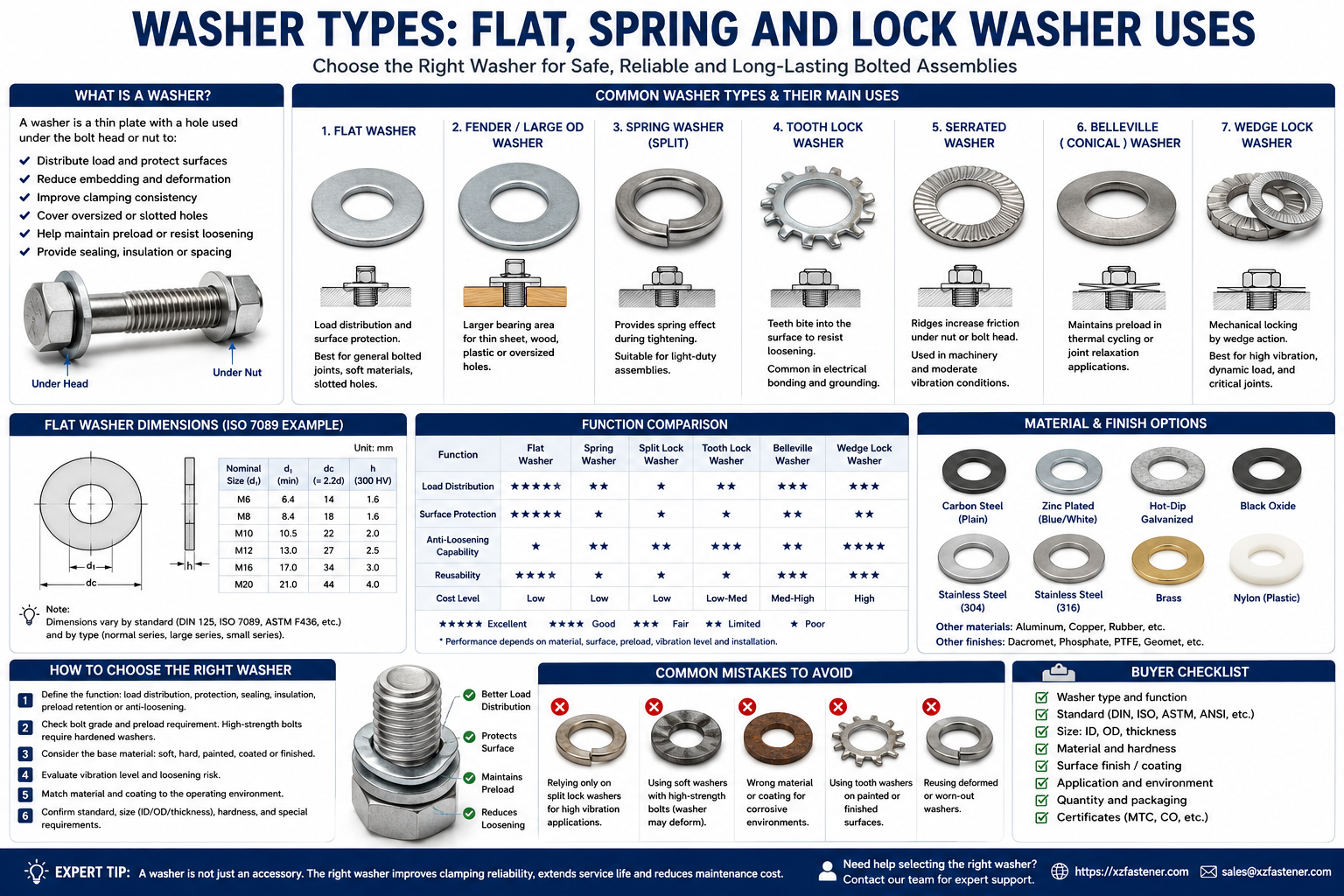
Шайбы являются небольшими деталями, но они часто решают, останется ли болтовое соединение стабильным, защитит ли сопрягаемая поверхность или выйдет из строя из-за потери предварительного натяга, вибрации, коррозии или неправильного подбора твердости.
Для промышленных покупателей ключевым вопросом является не просто «Нужна ли мне стиральная машина?» Настоящий вопрос: Какой тип шайбы следует использовать под этим болтом или гайкой — плоская шайба, пружинная шайба, стопорная шайба, зубчатая шайба, коническая шайба или нестандартная шайба?
В этом руководстве описываются типы шайб, использование плоских шайб, ограничения пружинных шайб, выбор стопорной шайбы, выбор материала, подбор твердости и типичные ошибки при покупке. Оно написано для покупателей, подрядчиков, дистрибьюторов и инженеров, которым необходимо выбирать шайбы для реального промышленного применения, а не просто сравнивать названия деталей.
Основное содержание
Что такое стиральная машина и почему это важно?
Шайба — это крепежный элемент пластинчатой формы, помещаемый под головку болта, головку винта или гайку. Его работа может показаться простой, но в болтовом соединении она может повлиять на несколько вещей:
- Контактное давление под головкой болта или гайкой
- Защита поверхности
- Покрытие отверстий
- Стабильность предварительной нагрузки
- Устойчивость к внедрению
- Коррозионная совместимость
- Защита от ослабления
- Электрический контакт или изоляция
- Уплотнение или интервал
Распространенной ошибкой является отношение к стиральным машинам как к «дешевым аксессуарам». На практике шайбу следует выбирать вместе с болтом, гайкой, основным материалом, методом затяжки и рабочей средой.
Например, мягкая шайба под высокопрочным болтом может деформироваться после затяжки. Зубчатая стопорная шайба может повредить окрашенную поверхность. По привычке можно использовать разъемную пружинную шайбу, даже если она не рассчитана на сильную вибрацию. Это не теоретические проблемы; они проявляются в виде незакрепленных узлов, повреждений покрытия, следов ржавчины, неравномерного крепления и претензий по гарантии.
XZ Fastener перечисляет промышленные шайбы как специальную категорию продукции, включая плоские шайбы, пружинные шайбы, стопорные шайбы, шайбы крыльев, зубчатые шайбы, квадратные шайбы, конические шайбы, уплотнительные шайбы и специальные шайбы. Доступные варианты включают углеродистую сталь, нержавеющую сталь, латунь, алюминий, нейлон, резину и специальные материалы. Вы можете просмотреть категории стиральных машин здесь: Промышленные шайбы.
Краткий обзор основных типов стиральных машин
| Тип шайбы | Основная функция | Типичное использование | Ключевой риск при неправильном использовании |
|---|---|---|---|
| Плоская шайба | Распределение нагрузки и защита поверхности | Общие болтовые соединения, мягкие материалы, прорезные отверстия. | Самостоятельно не блокирует соединение. |
| Кузовная шайба / шайба большого наружного диаметра (OD) | Большая площадь подшипника | Тонкий лист, дерево, пластик, большие отверстия. | Слишком большой внешний диаметр (OD) может мешать монтажному пространству. |
| Пружинная шайба | Обеспечивает пружинящий эффект во время затяжки. | Сборки для легких условий эксплуатации, старые конструкции, некритическое использование | Часто переоценивают как антивибрационное решение. |
| Разъемная стопорная шайба | Традиционная недорогая стопорная шайба | Общие метизы, некритические соединения | Плохой выбор для серьезной виброблокировки. |
| Зубчатая шайба | Вгрызается в поверхность | Электрическое соединение, заземление, маленькие винты | Повреждает покрытие или сопрягаемую поверхность. |
| Зубчатая шайба | Увеличивает трение за счет зубцов. | Фланцевые болты, оборудование, умеренная вибрация | Может маркировать мягкие или декоративные поверхности. |
| Бельвиль / Коническая шайба | Выдерживает нагрузку за счет прогиба пружины | Термоциклирование, сохранение предварительной нагрузки, ограниченное пространство | Требуется правильный расчет отклонения нагрузки |
| Клиновая стопорная шайба | Механическая блокировка клиновым эффектом | Высокая вибрация, динамическая нагрузка, тяжелая техника | Более высокая стоимость; на поверхности может возникнуть маркировка |
Первое правило выбора простое: выбирайте стиральную машину по функциям, а не по привычке.
Плоские шайбы: использование, сильные стороны и логика выбора
Что такое плоская шайба?
Плоская шайба, также называемая простой шайбой, является наиболее часто используемым типом шайб. Он имеет плоскую круглую форму с центральным отверстием.
Его основная цель – не остановить расшатывание. Плоская шайба в основном обеспечивает устойчивую опорную поверхность между крепежным элементом и соединяемой деталью.
Основное применение плоских шайб
1. Распределение нагрузки
Когда болт или гайка затягиваются непосредственно на мягкий или тонкий материал, контактное давление может быть слишком концентрированным. Плоская шайба распределяет нагрузку на большую площадь.
Это полезно для:
- Алюминиевые детали
- Пластиковые компоненты
- Деревянные сборки
- Тонкий листовой металл
- Окрашенные поверхности
- Прорезные отверстия
- Увеличенные зазорные отверстия
Если шайба слишком маленькая, головка болта или гайка все равно могут врезаться в поверхность. Если шайба слишком мягкая, она может деформироваться и снизить предварительную нагрузку.
2. Защита сопрягаемой поверхности
Плоские шайбы уменьшают прямое трение между головкой гайки или болта и соединяемой деталью. Это помогает защитить:
- Окрашенные поверхности
- Оцинкованные поверхности
- Оборудование из нержавеющей стали
- Алюминиевые рамы
- Монтажные пластины для оборудования
- Декоративные металлические детали
Это имеет значение, когда узел будет снят и переустановлен или когда видимые повреждения поверхности недопустимы.
3. Поддержка отверстий большого размера или с прорезями.
Плоские шайбы часто используются там, где отверстия больше диаметра болта. Для прорезных отверстий или мягких материалов шайба большего наружного диаметра (OD) часто предпочтительнее стандартной шайбы наружного диаметра.
Например:
| Состояние отверстия | Лучший выбор стиральной машины |
|---|---|
| Нормальное отверстие с зазором | Стандартная плоская шайба |
| Большое зазорное отверстие | Шайба большого наружного диаметра (OD) |
| Прорезное отверстие | Шайба большого OD или конструкционная шайба |
| Тонкий листовой металл | Кузовная шайба или шайба большого наружного диаметра (OD) |
| Высокопрочное соединение | Закаленная шайба |
Стандарты и твердость плоской шайбы
Общие стандарты плоских шайб включают DIN 125, DIN 9021, ISO 7089, ISO 7090, ISO 7091, ASTM F436 и ASTM F844. На странице поставки шайб XZ Fastener они перечислены как общие стандарты шайб, а также показаны варианты твердости, такие как HV100, HV140, HV200, HV300, 45H и 300HV.
Важным моментом для покупателей является не только стандартный номер. Это еще и твердость.
Практическое правило:
| Прочность болта/винта | Направление выбора шайбы |
|---|---|
| Низкопрочный общий болт | Стандартная плоская шайба из углеродистой стали или нержавеющей стали. |
| Болт класса 8.8 | В зависимости от конструкции допускается использование обычной шайбы. |
| Класс 10.9 или шарнир с высоким преднатягом | Рассмотрите вариант 300HV или закаленную шайбу. |
| Структурный болт в сборе | Следуйте стандарту проекта, например ASTM F436, или требованиям чертежа. |
| Мягкий основной материал | Используйте шайбу с большим наружным диаметром (OD), но при этом проверяйте твердость шайбы. |
ISO 7089 включает классы твердости плоских шайб 200 HV и 300 HV, а его область применения связывает пригодность твердости шайбы с различными классами свойств болтов. Простым языком покупок: не подкладывайте мягкую шайбу под высокопрочный болт, если это не позволяет чертеж.
Когда выбирать плоские шайбы
Выбирайте плоские шайбы, если цель:
- Распределение нагрузки
- Защита поверхности
- Стабильная опорная поверхность
- Покрытие отверстий
- Уменьшение встраивания
- Соответствие болтов и гаек в обычных сборках
Не выбирайте плоскую шайбу, если ваша единственная цель — виброблокировка. Плоская шайба улучшает контакт подшипника, но сама по себе не останавливает вращение резьбы.
Пружинные шайбы: что они могут и чего не могут
Что такое пружинная шайба?
Пружинная шайба предназначена для обеспечения упругой силы. На многих рынках термин «пружинная шайба» используется для описания разъемных пружинных шайб, но он также может включать волнистые шайбы и тарельчатые шайбы.
К распространенным типам пружинных шайб относятся:
| Тип | Форма | Основное использование |
|---|---|---|
| Разъемная пружинная шайба | Вырезанное кольцо спиральной формы | Традиционная недорогая поддержка напряжения |
| Волновая шайба | Волнистый профиль | Легкая компенсация преднатяга или осевого люфта |
| Бельвиль Шайер | Конический диск | Сохранение предварительной нагрузки, компенсация теплового расширения |
Практическое использование пружинных шайб
Пружинные шайбы все еще могут быть полезны в:
- Легкие сборки
- Некритическое оборудование
- Недорогое оборудование
- Приложения по старым чертежам
- Легкая вибрация при низком инженерном риске
- Сборки, в которых полезен небольшой пружинящий эффект
- Ситуации, когда этого требует спецификация заказчика
Однако пружинная шайба не должна выбираться автоматически всякий раз, когда покупатель говорит «против расшатывания».
Важное ограничение: разрезные пружинные шайбы часто переоценивают.
Именно здесь многие статьи общего характера избегают вынесения четкого суждения. С точки зрения выбора крепежа традиционную разрезную пружинную шайбу часто понимают неправильно.
В Руководстве по проектированию крепежных изделий НАСА поясняется, что типичная стопорная шайба с винтовой пружиной действует как пружина во время затяжки, но обычно становится плоской после полной затяжки болта; в этот момент она эквивалентна сплошной плоской шайбе, и ее фиксирующая способность описывается как несуществующая.
Это не означает, что каждая пружинная шайба бесполезна в любой сборке. Это означает, что покупателям не следует полагаться на разрезную пружинную шайбу как на единственный метод фиксации при серьезной вибрации, ударных нагрузках, критически важном для безопасности оборудовании или болтовых соединениях с высоким преднатягом.
Когда пружинные шайбы имеют смысл
Используйте пружинные шайбы, когда:
- Приложение не критично
- В дизайне они уже указаны.
- Нагрузка легкая и средняя.
- Вибрация низкая
- Контроль затрат имеет значение
- Шайба в основном используется как традиционный аппаратный компонент.
Не используйте разрезные пружинные шайбы в качестве единственного метода фиксации, если:
- Оборудование сильно вибрирует
- Соединение имеет решающее значение для безопасности
- Крепеж высокопрочный и полностью затянутый.
- Поверхность твердая, шайба не может укусить
- Соединение будет проверено на предмет долговременной надежности предварительного натяга.
Стопорные шайбы: не все «стопорные» шайбы работают одинаково
Что такое стопорная шайба?
Стопорная шайба — это шайба, предназначенная для уменьшения ослабления. Но слово «замок» может ввести в заблуждение, поскольку разные стопорные шайбы действуют по-разному.
ASME B18.21.1 охватывает винтовые пружинные шайбы дюймовой серии, зубчатые стопорные шайбы и плоские шайбы, а также особо отмечает, что «замок» — это исторический термин, используемый в продукте, и не подразумевает постоянную блокировку в каждом применении.
Это полезное предупреждение для покупателей: не думайте, что шайба блокирует соединение только потому, что в названии продукта есть слово «замок».
Разъемная стопорная шайба
Разъемная стопорная шайба — самая распространенная недорогая стопорная шайба. Он часто используется в комплектах общего оборудования и старых конструкциях оборудования.
Подходит для
- Общие некритические сборки
- Легкое оборудование
- Низкая стоимость обслуживания
- Существующие чертежи, на которых указаны разъемные шайбы.
- Приложения, в которых риск отказа низок
Не подходит для
- Машины с высокой вибрацией
- Критически важные для безопасности соединения
- Тяжелые динамические нагрузки
- Прецизионное оборудование
- Структурные болты с высоким преднатягом
Экспертное заключение
Используйте разрезные стопорные шайбы, если этого требуют технические условия или когда сборка сопряжена с низким уровнем риска. Не продавайте и не выбирайте их в качестве серьезного решения для блокировки вибрации без объяснения ограничений.
Зубчатая шайба
Зубчатая стопорная шайба имеет внутренние или внешние зубья. Зубья впиваются в головку болта, гайку и сопрягаемую поверхность.
Подходит для
- Электрическое заземление
- Применение склеивания
- Маленькие винты
- Тонкий листовой металл
- Легкие сборки
- Области применения, где допустимо повреждение поверхности
Не подходит для
- Окрашенные поверхности
- Декоративная нержавеющая сталь
- Алюминиевые поверхности, на которых недопустимы следы
- Чувствительные к коррозии поверхности
- Высокопрочные детали, чувствительные к усталости
В руководстве НАСА отмечается, что зубчатые стопорные шайбы обеспечивают некоторую блокировку, но повреждают сопрягаемые поверхности; царапины могут увеличить риск образования трещин в сильно нагруженных деталях и повысить восприимчивость к коррозии.
Экспертное заключение
Зубные шайбы полезны, когда прикусывание поверхности является частью функции, например, заземления. Это плохой выбор, когда покрытие поверхности должна оставаться неповрежденной.
Зубчатая стопорная шайба
Зубчатая шайба имеет выступы, которые увеличивают трение под головкой гайки или болта.
Подходит для
- Фланцевые болты
- Чехлы для машин
- Кронштейны в сборе
- Умеренная вибрация
- Области применения, где допустимы отметки на поверхности
Не подходит для
- Окрашенные поверхности
- Мягкий алюминий
- Уплотнительные поверхности
- Готовые видимые части
- Часто снимаемые сборки
Экспертное заключение
Зубчатая шайба может улучшить трение, но оно все равно зависит от твердости поверхности, момента затяжки, покрытия и от того, теряет ли соединение предварительную нагрузку. Это лучше, чем слепо выбирать разъемную шайбу, но не равно инженерному решению, обеспечивающему виброблокировку.
Шайба Бельвиля / Коническая шайба
Шайба Бельвиля представляет собой коническую пружинную шайбу. Это не просто «стопорная шайба» в традиционном понимании. Его ценность заключается в сохранении нагрузки, когда сустав испытывает расслабление, тепловое расширение или ограниченное пространство.
В руководстве НАСА шайбы Бельвиля описываются как конические шайбы, используемые больше для поддержания равномерной растягивающей нагрузки, чем для фиксации; если они не имеют зубцов, они не обладают значительной фиксирующей способностью.
Подходит для
- Термальный велоспорт
- Высокотемпературные сборки
- Фланцевые соединения
- Соединения аккумулятора
- Оборудование для совместной релаксации
- Ограниченная по пространству конструкция предварительной нагрузки
- Сборки, требующие контролируемого отклонения пружины
Не подходит для
- Случайная замена плоских шайб
- Сборки без расчета нагрузки-прогиба
- Области применения, в которых шайба сплющивается за пределами рабочего диапазона
Экспертное заключение
Шайбы Бельвиля не являются «лучшими пружинными шайбами». Их следует выбирать по нагрузке, прогибу, расположению штабеля, материалу и рабочей температуре.
Клиновая стопорная шайба
В клиновой стопорной шайбе используется пара шайб с кулачками и зубцами. Он сопротивляется ослаблению за счет клинового действия, а не полагается только на трение.
Подходит для
- Сильная вибрация
- Железнодорожное оборудование
- Горное оборудование
- Ветроэнергетическое оборудование
- Строительная техника
- Тяжелые автомобили
- Динамические нагрузки в сборе
Не подходит для
- Недорогое общее оборудование
- Декоративные поверхности
- Очень маленькие сборки с ограничениями по пространству
- Области применения, в которых недопустимы вмятины на поверхности
Экспертное заключение
Если основная жалоба клиента заключается в том, что «болты продолжают ослабевать под воздействием вибрации», лучшим ответом, чем простое добавление пружинной шайбы, может быть клиновая стопорная шайба, используемая динамометрическая гайка, фиксатор резьбы, двойная гайка, контровочная проволока или модернизация конструкции.
Плоская шайба, пружинная шайба и стопорная шайба: практическое сравнение
| Точка выбора | Плоская шайба | Пружинная шайба | Стопорная шайба |
|---|---|---|---|
| Основная функция | Распределение нагрузки | Эластичный пружинящий эффект | Поддержка против ослабления |
| Лучше всего использовать для | Общие болтовые соединения | Легкая поддержка предварительной загрузки | Склонные к расшатыванию суставы |
| Защита поверхности | Хорошо | Ограниченный | Часто плохой, если кусается. |
| Устойчивость к вибрации | Нет | Ограниченный | Сильно зависит от типа |
| Многоразовое использование | Обычно хорошо | Ограничено после деформации | Зависит от дизайна |
| Стоимость | Низкий | Низкий | От низкого к высокому |
| Вопрос лучшего покупателя | «Нужна ли мне опора?» | «Нужен ли мне прогиб пружины?» | «Какой у меня есть риск ослабления?» |
Профессиональный отбор не должен спрашивать только «плоский или пружинный?» Он должен спросить: Какую проблему решает стиральная машина?
Выбор материала шайбы
Шайбы из углеродистой стали
Шайбы из углеродистой стали экономичны и широко используются в общем строительстве, машиностроении и сборке оборудования.
Общая покрытие
- Обычный
- Оцинкованный
- черное оксидирование
- Горячая оцинковка
- Фосфат
- Dacromet
- Цинк-алюминиевое покрытие
Лучшее для
- Внутреннее оборудование
- Общая техника
- Стальные конструкции
- Строительная техника
- Экономически чувствительные проекты
Остерегайтесь
Шайбы из углеродистой стали требуют соответствующего покрытия при использовании на открытом воздухе или во влажной среде. Простые стальные шайбы не подходят для длительного воздействия коррозии.
Шайбы из нержавеющей стали
Шайбы из нержавеющей стали используются там, где важна устойчивость к коррозии.
Общие оценки
- 304 нержавеющая сталь
- 316 нержавеющая сталь
- A2 нержавеющая сталь
- A4 нержавеющая сталь
Лучшее для
- Уличное оборудование
- Пищевое оборудование
- Химическое оборудование
- Прибрежная среда
- Комплекты болтов и гаек из нержавеющей стали
Экспертное заключение
Используйте 304 для обеспечения общей коррозионной стойкости. Используйте 316, если присутствует риск хлорида, морской воды или более сильной коррозии. При использовании сборок из нержавеющей стали учитывайте риск истирания и избегайте ненужных зазубренных поверхностей, если это не требуется.
Закаленные шайбы
Закаленные шайбы используются с высокопрочными болтами, где обычные мягкие шайбы могут деформироваться.
Лучшее для
- Болтовые сборки класса 10.9/12.9
- Тяжелая техника
- Структурные связи
- Соединения с высоким преднатягом
- Болтовые соединения, требующие стабильной несущей опоры
Экспертное заключение
Если болт высокопрочный, а шайба мягкая, то шайба становится слабым местом. Соединение может потерять предварительную нагрузку, даже если сам болт исправен.
Латунные, медные, нейлоновые, резиновые и пластиковые шайбы
Эти шайбы выбираются для выполнения специальных функций, а не для высокопрочного зажима.
| Материал | Основное использование |
|---|---|
| Латунь | Электрические, декоративные, устойчивые к коррозии, для легких условий эксплуатации. |
| Медь | Проводимость, уплотнение, мягкая опорная поверхность |
| Нейлон | Изоляция, расстояние, неметаллический контакт |
| Резина | Герметизация, гашение вибрации, водонепроницаемая опора |
| Инженерный пластик | Легкий вес, изоляция, защита от коррозии |
Не используйте эти материалы в строительных болтах, если это явно не требуется на чертеже.
Как правильно выбрать стиральную машину
Шаг 1. Определите реальную функцию
Спросите, что должна делать стиральная машина:
| Требование | Рекомендуемое направление |
|---|---|
| Распределенная нагрузка | Плоская шайба |
| Защитить поверхность | Плоская шайба |
| Закройте большое отверстие | Кузовная шайба или шайба большого диаметра (OD) |
| Матч высокопрочный болт | Закаленная шайба |
| Сопротивляйтесь легкому расшатыванию | Зубчатая или зубчатая шайба, если допускается повреждение поверхности. |
| Устойчивость к серьезной вибрации | Клиновая стопорная шайба или специальный метод фиксации |
| Поддержание предварительной нагрузки при термоциклировании | Шайба Бельвиля |
| Обеспечить герметизацию | Приклеенная уплотнительная шайба или резиновая шайба |
| Обеспечьте изоляцию | Нейлоновая или пластиковая шайба |
| Нестандартная толщина или внешний диаметр (OD) | Шайба на заказ |
Шаг 2. Сопоставьте твердость шайбы с маркой болта
Это одна из самых важных деталей при покупке стиральной машины.
Простая таблица суждений:
| Марка/класс болта | Риск шайбы | Лучший выбор |
|---|---|---|
| Класс 4.8 / 5.8 | Низкая предварительная нагрузка | Стандартная шайба обычно приемлема |
| Класс 8.8 | Средняя предварительная нагрузка | Проверьте твердость шайбы и материал основания. |
| Класс 10.9 | Более высокая предварительная нагрузка | Рекомендуется 300HV или закаленная шайба. |
| Класс 12.9 | Очень высокая предварительная нагрузка | Требуется закаленная шайба или специальная шайба |
| Нержавеющая сталь A2/A4 | Коррозионный фокус | Шайба из нержавеющей стали, проверка прочности и риска истирания. |
| Структурный болт | Критически важные для безопасности | Точно следуйте стандарту проекта |
На странице шайб XZ Fastener перечислены варианты твердости шайб, включая HV100, HV140, HV200, HV300, 45H и 300HV, что важно при подборе шайб к различным маркам болтов и требованиям проекта.
Шаг 3: Сопоставьте покрытие с окружающей средой
Не выбирайте шайбы только по цене. Покрытие должно соответствовать реальной рабочей среде.
| Окружающая среда | Направление покрытие шайбы |
|---|---|
| Сухой в помещении | Обычный, черное оксидирование, оцинкованный |
| Общий открытый | Горячая оцинковка, Dacromet, цинк-алюминиевое покрытие |
| Прибрежный/морской | Нержавеющая сталь 316 или подходящее антикоррозионное покрытие. |
| Химическое оборудование | Нержавеющая сталь, дуплексная нержавеющая сталь или специальный сплав. |
| Зона высоких температур | Избегайте покрытий с неподходящими температурными пределами. |
| Электрическое заземление | Зубная шайба может использоваться там, где требуется поверхностный прикус. |
Руководство по проектированию крепежных изделий НАСА также предупреждает, что металлизация или покрытие могут стать ограничивающим фактором для температуры эксплуатации крепежных изделий и коррозионных характеристик.
Шаг 4: Учитывайте повреждение поверхности
Некоторые шайбы защищают поверхность. Другие намеренно повреждают его, чтобы усилить сцепление.
| Тип шайбы | Поверхностный эффект |
|---|---|
| Плоская шайба | Защищает поверхность |
| Шайба большого наружного диаметра (OD) | Защищает и распределяет нагрузку |
| Зубная шайба | Вгрызается в поверхность |
| Зубчатая шайба | Поверхность маркировки |
| Клиновая стопорная шайба | Зубцы могут оставить следы на поверхности |
| Шайба Бельвиля | Зависит от гладкого или зубчатого типа. |
Если деталь окрашена, отполирована, пассивирована, анодирована или украшена декоративными элементами, не используйте зубчатую или зубчатую шайбу без одобрения.
Шаг 5. Убедитесь, что стандартной шайбы достаточно.
Стандартные шайбы подходят для многих применений. Но нестандартные шайбы нужны, когда проект требует:
- Специальный внешний диаметр
- Специальный внутренний диаметр
- Специальная толщина
- Нестандартная форма
- Специальная твердость
- Специальное покрытие
- Специальный материал
- Большая площадь подшипника
- Электрическая изоляция
- Функция уплотнения
- Допуск на основе чертежа
Для проектов шайб на основе чертежей или рабочих условий используйте команду Индивидуальный сервис крепежа. На странице индивидуального обслуживания перечислены такие варианты, как специальные материалы, устойчивые к коррозии крепежи, специальная обработка поверхности, нестандартные размеры и производство на основе чертежей, образцов или условий работы.
Практический выбор по применению
| Приложение | Рекомендуемый выбор стиральной машины | Причина |
|---|---|---|
| Общая техника | Оцинкованная плоская шайба | Распределение нагрузки и низкая стоимость |
| Высокопрочное болтовое соединение | Закаленная плоская шайба | Предотвратить деформацию шайбы |
| Стальная конструкция | Закаленная или структурная шайба | Стабильный предварительный натяг и поддержка подшипников |
| Мягкая алюминиевая часть | Плоская шайба большого наружного диаметра (OD) | Уменьшение вмятин на поверхности |
| Прорезное отверстие в кронштейне | Шайба большого наружного диаметра (OD) | Закройте паз и улучшите зону подшипника |
| Электрическое заземление | Внутренняя или внешняя зубная шайба | Зубы прокусывают покрытие при контакте |
| Декоративная сборка из нержавеющей стали | Плоская шайба из нержавеющей стали | Защита поверхности и устойчивость к коррозии |
| Наружное строительство | HDG или шайба из нержавеющей стали. | Лучшая коррозионная стойкость |
| Сильная вибрация | Система клиновых стопорных шайб или стопорных гаек | Более надежный метод предотвращения расшатывания |
| Термальный велоспорт | Шайба Бельвиля | Помогает поддерживать напряжение |
| Водонепроницаемая сборка | Приклеенная уплотнительная шайба | Уплотнение под винт или головку болта |
Распространенные ошибки, которых следует избегать покупателям
Ошибка 1: Заказ только «Шайбы M10»
«Шайба M10» не является полной спецификацией. Он не определяет тип, стандарт, твердость, материал, покрытие, внешний диаметр (OD), толщину или функцию.
Лучшие примеры:
- M10 Плоская шайба, ISO 7089, 300HV, оцинкованная
- M12 Пружинная шайба, DIN 127, углеродистая сталь, воронёный оксид
- 1/2″ Закаленная плоская шайба, ASTM F436, горячеоцинкованная
- M8 Стопорная шайба с внешним зубом, нержавеющая сталь 304
- Изготовленная на заказ шайба большого наружного диаметра (OD), нержавеющая сталь 316, требуется чертеж
Ошибка 2: использование пружинных шайб для всех требований, препятствующих расшатыванию
Это одна из самых распространенных привычек при закупках. Пружинные шайбы дешевы и привычны, но они не являются универсальным решением проблемы вибрации.
Если применение связано с высокой вибрацией, используйте правильный метод фиксации, а не просто добавляйте разрезную шайбу.
Ошибка 3: игнорирование твердости шайбы
Шайба, которая выглядит правильно, может оказаться неправильной, если она слишком мягкая. При высокой предварительной нагрузке болта мягкая шайба может врезаться, сплющиваться или деформироваться.
Это вызывает:
- Уменьшенная предварительная нагрузка
- Ослабленный сустав
- Неравномерный зажим
- Проблемы с повторной затяжкой
- Возможный риск усталости
Ошибка 4: неправильно смешивать покрытия
Оцинкованный болт с простой шайбой при использовании на открытом воздухе может сначала заржаветь на шайбе. Болт из нержавеющей стали с шайбой из углеродистой стали может вызвать проблемы с коррозией во влажной среде.
Материал и покрытие шайбы должны соответствовать болту, гайке и условиям эксплуатации.
Ошибка 5: использование зубчатых шайб на готовых поверхностях
Зубочистки работают путем кусания. Если клиент не хочет повреждения покрытия, зубные шайбы — неправильный выбор.
Ошибка 6: навсегда относиться к стиральным машинам как к многоразовым
Некоторые шайбы можно использовать повторно, если они не повреждены. Другие не следует использовать повторно после деформации, закусывания или сильной предварительной нагрузки.
Не используйте повторно:
- Треснувшие шайбы
- Пружинные шайбы сплющенные
- Деформированные закаленные шайбы
- Зубочистки с поврежденными зубами
- Корродированные шайбы
- Шайбы ответственных болтовых соединений без допуска
RFQ Контрольный список при покупке стиральной машины
Прежде чем запросить коммерческое предложение, подготовьте следующее:
| Товар | Что подтвердить |
|---|---|
| Тип шайбы | Плоская, пружинная, стопорная, зубчатая, зубчатая, тарельчатая, уплотнительная |
| Стандартный | DIN, ISO, ASTM, ANSI, JIS, BS, GB или рисунок |
| Размер | M6, M8, M10, 1/4″, 3/8″, 1/2″ и т. д. |
| Внутренний диаметр | Стандартный или индивидуальный |
| Внешний диаметр | Нормальный, маленький, большой, негабаритный |
| Толщина | Стандартный или индивидуальный |
| Материал | Углеродистая сталь, нержавеющая сталь, латунь, нейлон, резина и т. д. |
| Твердость | HV100, HV200, HV300, 45H, закаленные и т. д. |
| Обработка поверхности | Оцинкованный, HDG, воронёный, Dacromet, простой, PTFE |
| Соответствующая крепеж | Болт, гайка, винт, стержень с резьбой, анкер |
| Приложение | Машиностроение, строительство, электротехника, наружное использование, морское оборудование, вибрация |
| Сертификаты | MTC, отчет об инспекции, CO, EN 10204 3.1 при необходимости. |
На главной странице продукта XZ Fastener указано, что она поставляет болты, гайки, шайбы, винты, заклепки, анкеры, стержни с резьбой и специальные крепежные детали в соответствии со стандартами DIN / ISO / ASTM / ANSI / EN, с материалами и покрытиями, включая углеродистую сталь, нержавеющую сталь, легированную сталь, цинкование, горячее цинкование, черный оксид, Dacromet, PTFE и фосфат. Полный ассортимент продукции вы можете просмотреть здесь: Все продукция.
Для заказов на проект отправьте тип шайбы, стандарт, размер, материал, твердость, покрытие, количество и среду применения через Связаться с нами страница.
Ключевые выводы
- Плоские шайбы предназначены в основном для распределения нагрузки и защиты поверхности, а не для фиксации. Используйте их, когда соединению необходима устойчивая опорная поверхность или когда основной материал мягкий, тонкий, с прорезями или окрашенный.
- Пружинные шайбы часто используются чрезмерно. Разъемная пружинная шайба может быть приемлема в узлах легкой нагрузки, но ее не следует рассматривать как надежное антивибрационное решение для критических соединений.
- Стопорные шайбы должны подбираться по стопорному механизму. Разъемные, зубчатые, зубчатые, тарельчатые и клиновые стопорные шайбы работают по-разному.
- Твердость шайбы должна соответствовать прочности болта. Для высокопрочных болтов часто требуются закаленные шайбы для предотвращения заделки и потери предварительного натяга.
- Материал и покрытие должны соответствовать окружающей среде. Для наружного, морского, химического и электрического применения требуются различные варианты шайб.
Часто задаваемые вопросы
1. Чем отличается плоская шайба от пружинной?
Плоская шайба распределяет нагрузку и защищает поверхность. Пружинная шайба обеспечивает ограниченное усилие упругости во время затяжки. Плоская шайба обычно лучше подходит для опоры подшипника, а пружинная шайба используется в некоторых легких или традиционных конструкциях, предотвращающих расшатывание.
2. Действительно ли стопорные шайбы предотвращают ослабление болтов?
Это зависит от типа. Разъемные стопорные шайбы имеют ограниченную фиксирующую способность во многих полностью затянутых соединениях. Зубчатые шайбы могут обеспечить некоторую фиксацию, врезаясь в поверхность, но они повреждают поверхность. При высокой вибрации обычно более надежны клиновые стопорные шайбы, контргайки, фиксатор резьбы, контровочная проволока или специальные методы фиксации.
3. Когда следует использовать закаленную шайбу?
Используйте закаленную шайбу, когда преднатяг болта высокий, особенно с высокопрочными болтами, такими как класс 10.9, класс 12.9, или сборками конструкционных болтов. Мягкая шайба может деформироваться и снизить силу зажима.
4. Являются ли шайбы из нержавеющей стали лучше, чем оцинкованные?
Не всегда. Шайбы из нержавеющей стали более устойчивы к коррозии, особенно на открытом воздухе, в морских зонах или в химической среде. Оцинкованные шайбы более экономичны для использования в помещениях или в мягких условиях. Лучший выбор зависит от экспозиции, стоимости и соответствующего материала крепежа.
5. Могу ли я использовать зубчатую шайбу на окрашенных поверхностях?
Только в том случае, если повреждение поверхности допустимо. Зубчатые стопорные шайбы работают, вгрызаясь в поверхность. Они могут повредить краску, покрытие, анодирование или покрытие из нержавеющей стали. Для окрашенных или декоративных поверхностей рассмотрите плоскую шайбу с другим методом фиксации.
Заключение
Выбор шайбы следует начинать с проблемы соединения, которую необходимо решить. Если проблема в распределении нагрузки, выберите плоскую шайбу. Если проблема в мягком материале или отверстиях увеличенного размера, выберите плоскую шайбу с большим наружным диаметром (OD). Если проблема в высокой предварительной нагрузке, выберите закаленную шайбу. Если проблема связана с тепловым расширением или ослаблением соединения, рассмотрите тарельчатую шайбу. Если проблема в вибрационном ослаблении, не выбирайте автоматически разрезную пружинную шайбу; оцените зубчатую, рифленую, клиновую стопорную шайбу, контргайку, фиксатор резьбы или другое инженерное стопорное решение.
При промышленных закупках спецификация самой безопасной шайбы включает тип, стандарт, размер, материал, твердость, качество поверхности и условия применения. Стиральная машина – это не просто аксессуар. Это часть всей крепежной системы, и неправильно подобранная шайба может привести к ухудшению работы правильного болта.
Для поиска стандартных и нестандартных стиральных машин просмотрите Промышленные шайбы, просматривать Все продукцияили сообщите об особых размерах и условиях работы через Индивидуальный сервис крепежа.
 English
  Español
  Français
  Español de México
  العربية
  Deutsch
  Русский
  Tiếng Việt
  Bahasa Indonesia
  Italiano
  简体中文
简体中文