
مقدمة
الغسالات عبارة عن أجزاء صغيرة، ولكنها غالبًا ما تقرر ما إذا كانت الوصلة المُثبتة بمسامير ستبقى مستقرة، أو تحمي سطح التزاوج، أو تفشل بسبب فقدان التحميل المسبق، أو الاهتزاز، أو التآكل، أو مطابقة الصلابة الخاطئة.
بالنسبة للمشترين الصناعيين، فإن السؤال الرئيسي ليس ببساطة "هل أحتاج إلى غسالة؟" السؤال الحقيقي هو: ما نوع الغسالة التي يجب استخدامها تحت هذا الترباس أو الصامولة - وردة مسطحة، وردة زنبركية، وردة قفل، غسالة أسنان، غسالة مخروطية، أو غسالة مخصصة؟
يشرح هذا الدليل أنواع الغسالات، واستخدامات وردة مسطحة، وقيود وردة زنبركية، واختيار وردة قفل، واختيارات المواد، ومطابقة الصلابة، وأخطاء الشراء الشائعة. إنه مكتوب للمشترين والمقاولين والموزعين والمهندسين الذين يحتاجون إلى اختيار غسالات للتطبيقات الصناعية الحقيقية بدلاً من مقارنة أسماء الأجزاء فقط.
المحتوى الرئيسي
ما هي الغسالة ولماذا هي مهمة؟
الغسالة عبارة عن مكون تثبيت على شكل لوحة يتم وضعها تحت رأس الترباس أو رأس المسمار أو الجوز. قد تبدو وظيفتها بسيطة، ولكن في المفصل المثبت بمسامير يمكن أن تؤثر على عدة أشياء:
- ضغط الاتصال تحت رأس الترباس أو الجوز
- حماية السطح
- تغطية الفتحة
- استقرار التحميل المسبق
- مقاومة التضمين
- التوافق مع التآكل
- أداء مضاد للتخفيف
- الاتصال الكهربائي أو العزل
- الختم أو التباعد
من الأخطاء الشائعة التعامل مع الغسالات على أنها "ملحقات رخيصة". من الناحية العملية، يجب اختيار الغسالة مع البرغي، والجوز، والمواد الأساسية، وطريقة الشد، وبيئة العمل.
على سبيل المثال، قد تتشوه الغسالة الناعمة الموجودة أسفل مسمار عالي القوة بعد ربطها. قد يؤدي السن وردة قفل إلى إتلاف السطح المطلي. قد يتم تحديد تقسيم وردة زنبركية خارج نطاق العادة حتى عندما لا يكون مناسبًا للاهتزازات الشديدة. هذه ليست مشاكل نظرية. تظهر على شكل تجميعات مفككة، وتلف الطلاء، وعلامات الصدأ، والتثبيت غير المتساوي، ومطالبات الضمان.
تسرد XZ Fastener الغسالات الصناعية كفئة منتجات مخصصة، بما في ذلك الغسالات المسطحة، والغسالات الزنبركية، وغسالات القفل، وغسالات الرفارف، وغسالات الأسنان، والغسالات المربعة، والغسالات المخروطية، وغسالات الختم، والغسالات المخصصة. تشمل الخيارات المتاحة فولاذ كربوني، وفولاذ مقاوم للصدأ، والنحاس، والألومنيوم، والنايلون، والمطاط، والمواد الخاصة. يمكنك مراجعة فئات الغسالات هنا: الغسالات الصناعية.
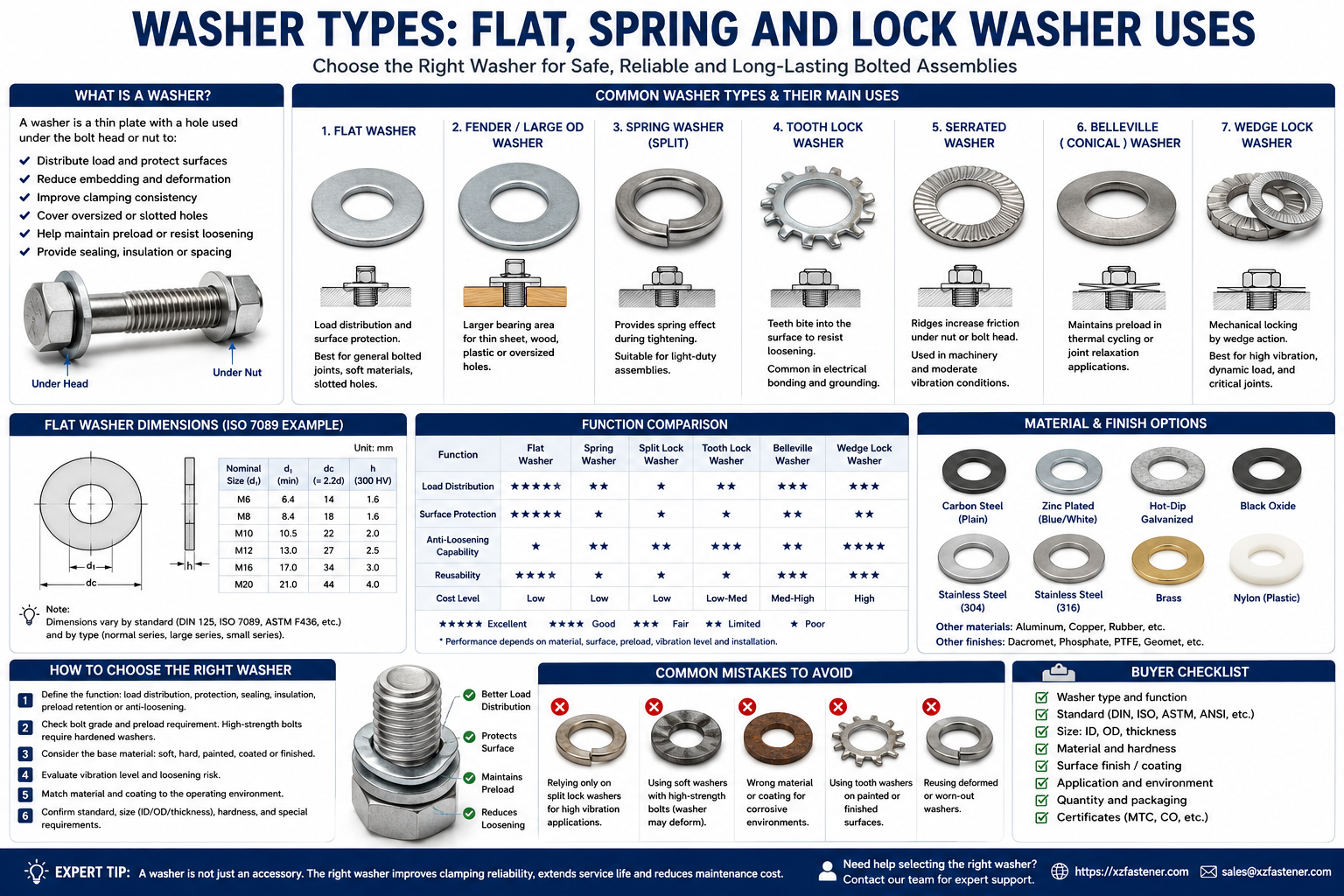
أنواع الغسالات الرئيسية في لمحة سريعة
| نوع الغسالة | الوظيفة الرئيسية | الاستخدام النموذجي | المخاطر الرئيسية إذا أسيء استخدامها |
|---|---|---|---|
| وردة مسطحة | توزيع الأحمال وحماية السطح | وصلات مسامير عامة، مواد ناعمة، فتحات مشقوقة | لا يقفل المفصل من تلقاء نفسه |
| درابزين / غسالة OD كبيرة | منطقة تحمل أكبر | ورقة رقيقة، خشب، بلاستيك، ثقوب كبيرة الحجم | قد يتداخل OD الكبير جدًا مع مساحة التجميع |
| وردة زنبركية | يوفر تأثير الربيع أثناء الشد | التجميعات الخفيفة، والتصميمات القديمة، والاستخدام غير الحرج | غالبًا ما يتم المبالغة في تقديره كحل مضاد للاهتزاز |
| وردة قفل مشقوقة | غسالة قفل تقليدية منخفضة التكلفة | الأجهزة العامة والمفاصل غير الحرجة | اختيار سيء لقفل الاهتزاز الخطير |
| الأسنان وردة قفل | لدغات في السطح | الربط الكهربائي، التأريض، البراغي الصغيرة | تلف الطلاء أو سطح التزاوج |
| غسالة مسننة | يزيد الاحتكاك عن طريق المسننات | براغي شفة، آلات، اهتزاز معتدل | يمكن وضع علامة على الأسطح الناعمة أو المزخرفة |
| بيلفيل / الغسالة المخروطية | يحافظ على الحمل مع انحراف الربيع | التدوير الحراري، الاحتفاظ بالتحميل المسبق، المساحة المحدودة | يحتاج إلى تصميم انحراف الحمل الصحيح |
| إسفين وردة قفل | قفل ميكانيكي بتأثير الإسفين | اهتزاز عالي، حمل ديناميكي، آلات ثقيلة | تكلفة أعلى قد تحدث علامات السطح |
قاعدة الاختيار الأولى بسيطة: اختر الغسالة حسب وظيفتها، وليس حسب عادتها.
غسالات مسطحة: الاستخدامات ونقاط القوة ومنطق الاختيار
ما هو وردة مسطحة؟
إن وردة مسطحة، والتي تسمى أيضًا بالغسالة العادية، هي نوع الغسالة الأكثر استخدامًا. لها شكل دائري مسطح مع فتحة مركزية.
والغرض الرئيسي منه هو عدم التوقف عن التخفيف. يوفر وردة مسطحة بشكل أساسي سطح محمل مستقر بين أداة التثبيت والجزء المتصل.
الاستخدامات الرئيسية للغسالات المسطحة
1. توزيع الحمل
عندما يتم ربط المسمار أو الصامولة مباشرة على مادة ناعمة أو رقيقة، قد يكون ضغط التلامس شديد التركيز. يقوم وردة مسطحة بتوزيع الحمل على مساحة أكبر.
وهذا مفيد ل:
- أجزاء من الألومنيوم
- مكونات بلاستيكية
- التجمعات الخشبية
- صفائح معدنية رقيقة
- الأسطح المطلية
- فتحات مشقوقة
- فتحات إزالة كبيرة الحجم
إذا كانت الغسالة صغيرة جدًا، فقد يظل رأس المزلاج أو الصامولة يعض على السطح. إذا كانت الغسالة ناعمة جدًا، فقد تتشوه وتقلل من التحميل المسبق.
2. حماية سطح التزاوج
تعمل الغسالات المسطحة على تقليل الاحتكاك المباشر بين الصمولة أو رأس الترباس والجزء المتصل. وهذا يساعد على حماية:
- الأسطح المطلية
- الأسطح المطلية بالزنك
- معدات فولاذ مقاوم للصدأ
- إطارات من الألومنيوم
- لوحات تركيب الآلات
- الأجزاء المعدنية المزخرفة
وهذا مهم عندما تتم إزالة التجميع وإعادة تثبيته، أو عندما يكون تلف السطح المرئي غير مقبول.
3. دعم الثقوب كبيرة الحجم أو المشقوقة
غالبًا ما تستخدم الغسالات المسطحة عندما تكون الثقوب أكبر من قطر الترباس. بالنسبة للثقوب المشقوقة أو المواد الناعمة، غالبًا ما تكون الغسالة ذات القطر الخارجي الأكبر أفضل من الغسالة ذات القطر الخارجي القياسي.
على سبيل المثال:
| حالة الفتحة | اختيار أفضل للغسالة |
|---|---|
| فتحة التخليص العادية | معيار وردة مسطحة |
| فتحة خلوص كبيرة | غسالة OD كبيرة |
| فتحة مشقوقة | OD كبيرة أو غسالة هيكلية |
| صفائح معدنية رقيقة | غسالة الحاجز أو غسالة OD كبيرة |
| مفصل عالي القوة | غسالة تصلب |
معايير وردة مسطحة والصلابة
تتضمن معايير وردة مسطحة الشائعة DIN 125، DIN 9021، ISO 7089، ISO 7090، ISO 7091، ASTM F436 وASTM F844. تسرد صفحة إمداد الغسالة XZ Fastener هذه المعايير كمعايير للغسالات الشائعة وتعرض أيضًا خيارات الصلابة مثل HV100 وHV140 وHV200 وHV300 و45H و300HV.
النقطة المهمة بالنسبة للمشترين ليست الرقم القياسي فقط. ومن الصلابة أيضا.
قاعدة عملية:
| قوة الترباس/المسمار | اتجاه اختيار الغسالة |
|---|---|
| الترباس العام منخفض القوة | معيار فولاذ كربوني أو وردة مسطحة غير القابل للصدأ |
| الترباس فئة 8.8 | قد تكون الغسالة العادية مقبولة حسب التصميم |
| فئة 10.9 أو وصلة التحميل المسبق العالي | فكر في 300HV أو الغسالة المقواة |
| تجميع الترباس الهيكلي | اتبع معايير المشروع، مثل ASTM F436 أو متطلبات الرسم |
| مادة أساسية ناعمة | استخدم غسالة ذات قطر خارجي أكبر، ولكن مع ذلك تحقق من صلابة الغسالة |
يتضمن ISO 7089 فئات صلابة الغسالة العادية 200 HV و300 HV، ويربط نطاقها مدى ملاءمة صلابة الغسالة لفئات خصائص البراغي المختلفة. بلغة الشراء البسيطة: لا تضع غسالة ناعمة تحت مسمار عالي القوة ما لم يسمح الرسم بذلك.
متى تختار الغسالات المسطحة
اختر غسالات مسطحة عندما يكون الهدف هو:
- توزيع الأحمال
- حماية السطح
- سطح تحمل مستقر
- تغطية الفتحة
- تقليل التضمين
- مطابقة البراغي والصواميل في التجميعات العادية
لا تختر وردة مسطحة إذا كان هدفك الوحيد هو قفل الاهتزاز. يعمل وردة مسطحة على تحسين اتصال المحمل، لكنه لا يوقف دوران الخيط من تلقاء نفسه.
غسالات الربيع: ما يمكنهم وما لا يمكنهم فعله
ما هو وردة زنبركية؟
تم تصميم وردة زنبركية لتوفير قوة مرنة. في العديد من الأسواق، يتم استخدام المصطلح "وردة زنبركية" لوصف غسالات زنبركية مقسمة، ولكنه يمكن أن يشمل أيضًا غسالات موجة وغسالات بيلفيل.
تتضمن أنواع وردة زنبركية الشائعة ما يلي:
| اكتب | الشكل | الاستخدام الرئيسي |
|---|---|---|
| سبليت وردة زنبركية | قطع حلقة على شكل حلزوني | دعم التوتر التقليدي منخفض التكلفة |
| غسالة الموجة | ملف تعريف متموج | التحميل المسبق الخفيف أو تعويض اللعب المحوري |
| غسالة بيلفيل | قرص مخروطي | الاحتفاظ بالحمل المسبق، وتعويض التمدد الحراري |
الاستخدامات العملية للغسالات الربيعية
قد تظل غسالات الربيع مفيدة في:
- الجمعيات الخفيفة
- المعدات غير الحرجة
- أجهزة منخفضة التكلفة
- التطبيقات التالية للرسومات القديمة
- اهتزاز خفيف حيث تكون المخاطر الهندسية منخفضة
- التجميعات التي يكون فيها تأثير الربيع الصغير مفيدًا
- الحالات التي تتطلب مواصفات العميل ذلك
ومع ذلك، لا ينبغي تحديد وردة زنبركية تلقائيًا عندما يقول المشتري "مضاد للفك".
القيد المهم: غالبًا ما تكون غسالات الزنبرك المنقسمة مبالغًا فيها
هذا هو المكان الذي تتجنب فيه العديد من المقالات العامة إصدار حكم واضح. من وجهة نظر اختيار المثبت، غالبًا ما يُساء فهم الانقسام التقليدي وردة زنبركية.
يشرح دليل تصميم السحابة التابع لناسا أن الزنبرك الحلزوني النموذجي وردة قفل يعمل كنابض أثناء الشد، ولكنه عادة ما يكون مسطحًا بمجرد عزم الترباس بالكامل؛ في تلك المرحلة يكون مكافئًا لـ وردة مسطحة الصلبة وتوصف قدرة القفل الخاصة به بأنها غير موجودة.
هذا لا يعني أن كل وردة زنبركية عديم الفائدة في كل تجميع. وهذا يعني أنه لا ينبغي للمشترين الاعتماد على وردة زنبركية باعتبارها طريقة القفل الوحيدة للاهتزازات الخطيرة، أو حمل الصدمات، أو المعدات الحيوية للسلامة، أو الوصلات المثبتة بمسامير عالية التحميل مسبقًا.
عندما تكون غسالات الربيع منطقية
استخدم غسالات الربيع عندما:
- التطبيق ليس حاسما
- التصميم يحددهم بالفعل
- الحمل خفيف إلى متوسط
- الاهتزاز منخفض
- مراقبة التكاليف مهمة
- يتم استخدام الغسالة بشكل أساسي كأحد مكونات الأجهزة التقليدية
تجنب استخدام غسالات النوابض المنقسمة كطريقة القفل الوحيدة عندما:
- المعدات تهتز بشدة
- المفصل أمر بالغ الأهمية للسلامة
- السحابة عالية القوة وعزم الدوران بالكامل
- السطح صلب ولا يمكن للغسالة أن تعض
- سيتم فحص المفصل للتأكد من موثوقية التحميل المسبق على المدى الطويل
غسالات القفل: لا تعمل جميع غسالات "القفل" بنفس الطريقة
ما هو وردة قفل؟
وردة قفل عبارة عن غسالة مصممة لتقليل الارتخاء. لكن كلمة "قفل" يمكن أن تكون مضللة لأن غسالات القفل المختلفة تعمل بطرق مختلفة.
يغطي ASME B18.21.1 غسالات ذات قفل زنبركي حلزوني من سلسلة بوصة، وغسالات قفل مسننة، وغسالات عادية، ويشير على وجه التحديد إلى أن "القفل" هو مصطلح منتج تاريخي ولا يعني القفل الدائم في كل تطبيق.
وهذا تحذير مفيد للمشترين: لا تفترض أن الغسالة تقفل المفصل لمجرد أن اسم المنتج يتضمن "القفل".
وردة قفل مشقوقة
وردة قفل مشقوقة هو وردة قفل الأكثر شيوعًا ومنخفض التكلفة. غالبًا ما يتم استخدامه في مجموعات الأجهزة العامة وتصميمات الآلات القديمة.
مناسبة ل
- التجميعات العامة غير الحرجة
- المعدات الخفيفة
- صيانة منخفضة التكلفة
- الرسومات الموجودة التي تحدد الغسالات المقسمة
- التطبيقات التي تكون فيها مخاطر الفشل منخفضة
غير مناسب ل
- آلات عالية الاهتزاز
- المفاصل الحرجة للسلامة
- الأحمال الديناميكية الثقيلة
- المعدات الدقيقة
- مسامير هيكلية عالية التحميل
حكم الخبراء
استخدم غسالات القفل المقسمة عندما تتطلب المواصفات ذلك أو عندما يكون التجميع منخفض المخاطر. لا تقم ببيعها أو تحديدها كحل جدي لقفل الاهتزاز دون توضيح القيود.
الأسنان وردة قفل
السن وردة قفل له أسنان داخلية أو خارجية. تعض الأسنان في رأس الترباس والجوز وسطح التزاوج.
مناسبة ل
- التأريض الكهربائي
- تطبيقات الربط
- مسامير صغيرة
- صفائح معدنية رقيقة
- الجمعيات الخفيفة
- التطبيقات التي يكون فيها الضرر السطحي مقبولاً
غير مناسب ل
- الأسطح المطلية
- ديكور فولاذ مقاوم للصدأ
- أسطح الألمنيوم حيث تكون العلامات غير مقبولة
- الأسطح الحساسة للتآكل
- أجزاء حساسة للتعب عالية القوة
يشير دليل ناسا إلى أن غسالات القفل المسننة توفر بعض إجراءات القفل، ولكنها تلحق الضرر بأسطح التزاوج؛ قد تزيد الخدوش من خطر تكوين الشقوق في الأجزاء شديدة الضغط وتزيد من قابلية التآكل.
حكم الخبراء
تكون غسالات الأسنان مفيدة عندما يكون العض على السطح جزءًا من الوظيفة، مثل التأريض. إنها خيار سيء عندما يجب أن يظل السطح سليمًا.
مسنن وردة قفل
تحتوي الغسالة المسننة على نتوءات تزيد من الاحتكاك أسفل رأس الصمولة أو الترباس.
مناسبة ل
- مسامير شفة
- أغطية الآلات
- تركيبات قوس
- اهتزاز معتدل
- التطبيقات التي تكون فيها العلامات السطحية مقبولة
غير مناسب ل
- الأسطح المطلية
- الألومنيوم الناعم
- وجوه الختم
- الانتهاء من الأجزاء المرئية
- التجميعات التي تتم إزالتها بشكل متكرر
حكم الخبراء
يمكن للغسالة المسننة أن تحسن الاحتكاك، لكنها لا تزال تعتمد على صلابة السطح، وعزم الدوران المشدود، والطلاء، وما إذا كان المفصل يفقد التحميل المسبق. إنه أفضل من اختيار غسالة مقسمة بشكل أعمى، ولكنه لا يساوي الحل المصمم هندسيًا لقفل الاهتزاز.
غسالة بيلفيل / غسالة مخروطية
غسالة بيلفيل مخروطية الشكل وردة زنبركية. إنها ليست "وردة قفل" بالمعنى التقليدي. تكمن قيمته في الحفاظ على الحمل عندما يعاني المفصل من الاسترخاء أو التمدد الحراري أو المساحة المحدودة.
يصف دليل ناسا غسالات بيلفيل بأنها غسالات مخروطية تستخدم للحفاظ على حمل شد موحد أكثر من القفل؛ ما لم تكن مسننة، فليس لديها قدرة قفل كبيرة.
مناسبة ل
- ركوب الدراجات الحرارية
- التجمعات ذات درجة الحرارة العالية
- المفاصل شفة
- توصيلات البطارية
- المعدات مع استرخاء المفاصل
- تصميم التحميل المسبق محدود المساحة
- التجميعات التي تحتاج إلى التحكم في انحراف الزنبرك
غير مناسب ل
- استبدال عشوائي للغسالات المسطحة
- التجميعات بدون حساب انحراف الحمل
- التطبيقات التي يتم فيها تسطيح الغسالة خارج نطاق عملها
حكم الخبراء
غسالات بيلفيل ليست "غسالات زنبركية أفضل". يجب أن يتم اختيارها حسب الحمل، والانحراف، وترتيب المكدس، والمواد، ودرجة حرارة العمل.
إسفين وردة قفل
يستخدم الإسفين وردة قفل زوجًا من الغسالات ذات الكاميرات والمسننات. إنه يقاوم الارتخاء من خلال حركة الإسفين بدلاً من الاعتماد فقط على الاحتكاك.
مناسبة ل
- اهتزاز شديد
- معدات السكك الحديدية
- آلات التعدين
- معدات طاقة الرياح
- آلات البناء
- المركبات الثقيلة
- جمعيات التحميل الديناميكي
غير مناسب ل
- الأجهزة العامة منخفضة التكلفة
- الأسطح الزخرفية
- تجميعات صغيرة جدًا ذات حدود للمساحة
- التطبيقات التي لا يسمح فيها بمسافة بادئة على السطح
حكم الخبراء
إذا كانت الشكوى الرئيسية للعميل هي "استمرار البراغي في الارتخاء تحت الاهتزاز"، فقد يكون الإسفين وردة قفل أو صامولة عزم الدوران السائدة أو قفل الخيوط أو الجوز المزدوج أو سلك الأمان أو إعادة التصميم إجابة أفضل من مجرد إضافة وردة زنبركية.
وردة مسطحة مقابل وردة زنبركية مقابل وردة قفل: مقارنة عملية
| نقطة التحديد | وردة مسطحة | وردة زنبركية | وردة قفل |
|---|---|---|---|
| الوظيفة الرئيسية | توزيع الأحمال | تأثير الربيع المرن | دعم مضاد للتخفيف |
| أفضل استخدام ل | وصلات مثبتة بشكل عام | دعم التحميل المسبق الخفيف | المفاصل المعرضة للارتخاء |
| حماية السطح | جيد | محدودة | غالبًا ما يكون سيئًا إذا كان من النوع العض |
| مقاومة الاهتزاز | لا | محدودة | يعتمد بشكل كبير على النوع |
| قابلية إعادة الاستخدام | عادة جيدة | محدودة بعد التشوه | يعتمد على التصميم |
| التكلفة | منخفض | منخفض | منخفض إلى مرتفع |
| سؤال أفضل المشتري | "هل أحتاج إلى دعم التحمل؟" | "هل أحتاج إلى انحراف الربيع؟" | "ما هو نوع خطر التخفيف الذي أواجهه؟" |
لا يجب أن يسأل الاختيار الاحترافي فقط "مسطحة أم زنبركية؟" وينبغي أن يسأل: ما هي المشكلة التي تحلها الغسالة؟
اختيار مواد الغسالة
غسالات فولاذ كربوني
تعتبر غسالات فولاذ كربوني اقتصادية وتستخدم على نطاق واسع في البناء العام، والآلات، وتجميع المعدات.
التشطيبات المشتركة
- عادي
- مطلي بالزنك
- أكسيد أسود
- تراجع الساخنة المجلفن
- الفوسفات
- Dacromet
- طلاء الزنك والألومنيوم
أفضل ل
- المعدات الداخلية
- الآلات العامة
- الهياكل الفولاذية
- أجهزة البناء
- المشاريع الحساسة من حيث التكلفة
احترس من
تحتاج غسالات فولاذ كربوني إلى طلاء مناسب عند استخدامها في الهواء الطلق أو في البيئات الرطبة. غسالات الفولاذ العادي ليست مناسبة للتعرض للتآكل على المدى الطويل.
غسالات فولاذ مقاوم للصدأ
يتم استخدام غسالات فولاذ مقاوم للصدأ عندما تكون مقاومة التآكل مهمة.
الدرجات المشتركة
- 304 فولاذ مقاوم للصدأ
- 316 فولاذ مقاوم للصدأ
- A2 فولاذ مقاوم للصدأ
- A4 فولاذ مقاوم للصدأ
أفضل ل
- معدات خارجية
- آلات الغذاء
- المعدات الكيميائية
- البيئات الساحلية
- فولاذ مقاوم للصدأ تجميعات الترباس والجوز
حكم الخبراء
استخدم 304 لمقاومة التآكل بشكل عام. استخدم 316 عند وجود كلوريد أو مياه البحر أو خطر تآكل أقوى. بالنسبة للتركيبات غير القابلة للصدأ، ضع في اعتبارك مخاطر الخدش وتجنب أسطح العض المسننة غير الضرورية ما لم يكن ذلك مطلوبًا.
غسالات تصلب
يتم استخدام الغسالات الصلبة مع مسامير عالية القوة حيث قد تتشوه الغسالات الناعمة العادية.
أفضل ل
- مجموعات الترباس فئة 10.9 / 12.9
- الآلات الثقيلة
- الاتصالات الهيكلية
- وصلات عالية التحميل المسبق
- تحتاج المفاصل المسدودة إلى دعم ثابت للمحمل
حكم الخبراء
إذا كان الترباس عالي القوة ولكن الغسالة ناعمة، تصبح الغسالة هي نقطة الضعف. قد يفقد المفصل التحميل المسبق حتى لو كان البرغي نفسه صحيحًا.
غسالات النحاس والنحاس والنايلون والمطاط والبلاستيك
يتم اختيار هذه الغسالات لوظائف خاصة، وليس للتثبيت عالي القوة.
| مادة | الاستخدام الرئيسي |
|---|---|
| النحاس | استخدام كهربائي وزخرفي ومقاوم للتآكل للاستخدام الخفيف |
| النحاس | الموصلية، الختم، سطح تحمل ناعم |
| نايلون | العزل، والتباعد، والاتصال غير المعدنية |
| مطاط | الختم، وتخميد الاهتزاز، ودعم مقاوم للماء |
| هندسة البلاستيك | خفيفة الوزن، العزل، فصل التآكل |
لا تستخدم هذه المواد في التثبيت الهيكلي إلا إذا كان الرسم يتطلب ذلك بوضوح.
كيفية اختيار الغسالة المناسبة
الخطوة 1: تحديد الوظيفة الحقيقية
اسأل عما يجب أن تفعله الغسالة:
| المتطلبات | الاتجاه الموصى به |
|---|---|
| انتشار الحمل | وردة مسطحة |
| حماية السطح | وردة مسطحة |
| تغطية حفرة كبيرة | درابزين أو غسالة OD كبيرة |
| تطابق الترباس عالية القوة | غسالة تصلب |
| مقاومة التخفيف الخفيف | مسننة أو غسالة أسنان، إذا كان الضرر السطحي مسموحًا به |
| مقاومة الاهتزازات الخطيرة | إسفين وردة قفل أو طريقة القفل الهندسية |
| الحفاظ على التحميل المسبق تحت الدراجات الحرارية | غسالة بيلفيل |
| توفير الختم | غسالة الختم المستعبدين أو غسالة المطاط |
| توفير العزل | غسالة النايلون أو البلاستيك |
| سمك مخصص أو OD | غسالة مخصصة |
الخطوة 2: قم بمطابقة صلابة الغسالة مع درجة الترباس
هذه هي واحدة من أكثر التفاصيل التي يتم التغاضي عنها عند شراء الغسالة.
جدول حكم بسيط:
| بولت الصف / الفئة | مخاطر الغسالة | خيار أفضل |
|---|---|---|
| الفئة 4.8 / 5.8 | تحميل مسبق منخفض | الغسالة القياسية مقبولة عادة |
| فئة 8.8 | التحميل المسبق المتوسط | تحقق من صلابة الغسالة والمواد الأساسية |
| فئة 10.9 | تحميل مسبق أعلى | يوصى باستخدام 300HV أو الغسالة المقواة |
| فئة 12.9 | تحميل مسبق عالي جدًا | مطلوب غسالة مقواة أو غسالة محددة |
| غير القابل للصدأ A2/A4 | التركيز على التآكل | غسالة غير قابلة للصدأ، تحقق من القوة والمخاطر المزعجة |
| الترباس الهيكلي | السلامة الحرجة | اتبع معيار المشروع بالضبط |
تسرد صفحة غسالة XZ Fastener خيارات صلابة الغسالة بما في ذلك HV100، وHV140، وHV200، وHV300، و45H، و300HV، وهو أمر مهم عند مطابقة الغسالات مع درجات البراغي المختلفة ومتطلبات المشروع.
الخطوة 3: مطابقة الطلاء مع البيئة
لا تختار الغسالات فقط بالسعر. يجب أن يتناسب الطلاء مع بيئة العمل الفعلية.
| البيئة | اتجاه إنهاء الغسالة |
|---|---|
| جاف في الأماكن المغلقة | عادي، أكسيد أسود، مطلي بالزنك |
| عام في الهواء الطلق | مجلفن بالغمس الساخن، Dacromet، طلاء من الألومنيوم والزنك |
| ساحلية/بحرية | فولاذ مقاوم للصدأ 316 أو طلاء مناسب مضاد للتآكل |
| المعدات الكيميائية | فولاذ مقاوم للصدأ، غير قابل للصدأ على الوجهين، أو سبيكة خاصة |
| منطقة ذات درجة حرارة عالية | تجنب الطلاءات ذات حدود درجة الحرارة غير المناسبة |
| التأريض الكهربائي | يمكن استخدام غسالة الأسنان عندما تكون هناك حاجة إلى عض سطحي |
يحذر دليل تصميم أدوات التثبيت التابع لناسا أيضًا من أن الطلاء أو الطلاء يمكن أن يصبح عاملاً مقيدًا في درجة حرارة خدمة أدوات التثبيت وأداء التآكل.
الخطوة 4: النظر في الأضرار السطحية
بعض الغسالات تحمي السطح. يقوم الآخرون بإتلافه عمدًا لخلق قبضة.
| نوع الغسالة | تأثير السطح |
|---|---|
| وردة مسطحة | يحمي السطح |
| غسالة OD كبيرة | يحمي وينتشر الحمل |
| غساله الاسنان | لدغات في السطح |
| غسالة مسننة | سطح العلامات |
| إسفين وردة قفل | التسنينات قد تحدد السطح |
| غسالة بيلفيل | يعتمد على النوع الأملس أو المسنن |
إذا كان الجزء مطليًا، أو مصقولًا، أو مؤكسدًا، أو مزخرفًا، فلا تستخدم غسالة مسننة أو مسننة دون موافقة.
الخطوة 5: تأكد مما إذا كانت الغسالة القياسية كافية
الغسالات القياسية مناسبة للعديد من التطبيقات. ولكن هناك حاجة إلى غسالات مخصصة عندما يتطلب المشروع:
- القطر الخارجي الخاص
- القطر الداخلي خاص
- سمك خاص
- شكل غير قياسي
- صلابة خاصة
- طلاء خاص
- مادة خاصة
- منطقة تحمل كبيرة
- العزل الكهربائي
- وظيفة الختم
- التسامح القائم على الرسم
بالنسبة لمشروعات الغسالات القائمة على الرسم أو ظروف العمل، استخدم خدمة التثبيت المخصصة. تسرد صفحة الخدمة المخصصة خيارات مثل المواد الخاصة، والمثبتات المقاومة للتآكل، والمعالجات السطحية الخاصة، والأبعاد المخصصة، والإنتاج بناءً على الرسومات أو العينات أو ظروف العمل.
الاختيار العملي عن طريق التطبيق
| التطبيق | يوصى باختيار الغسالة | السبب |
|---|---|---|
| الآلات العامة | مطلي بالزنك وردة مسطحة | توزيع الأحمال والتكلفة المنخفضة |
| وصلة مسمار عالية القوة | تصلب وردة مسطحة | منع تشوه الغسالة |
| الهيكل الصلب | غسالة تصلب أو الهيكلية | تحميل مسبق مستقر ودعم المحمل |
| جزء من الألومنيوم الناعم | OD كبير وردة مسطحة | تقليل المسافة البادئة السطحية |
| فتحة قوس مشقوقة | غسالة OD كبيرة | فتحة الغطاء وتحسين منطقة التحمل |
| التأريض الكهربائي | غسالات الأسنان الداخلية أو الخارجية | لدغة الأسنان من خلال طلاء للاتصال |
| التجمع الزخرفية غير القابل للصدأ | غير القابل للصدأ وردة مسطحة | حماية السطح ومقاومة التآكل |
| البناء في الهواء الطلق | HDG أو غسالة غير القابل للصدأ | مقاومة أفضل للتآكل |
| اهتزاز شديد | إسفين نظام وردة قفل أو صامولة قفل | طريقة أكثر موثوقية لمكافحة التخفيف |
| ركوب الدراجات الحرارية | غسالة بيلفيل | يساعد في الحفاظ على التوتر |
| تجميع مقاوم للماء | غسالة الختم المستعبدين | الختم تحت المسمار أو رأس الترباس |
الأخطاء الشائعة التي يجب على المشترين تجنبها
الخطأ 1: طلب "غسالة M10" فقط
"غسالة M10" ليست مواصفات كاملة. ولا يحدد النوع أو المعيار أو الصلابة أو المادة أو النهاية أو القطر الخارجي أو السُمك أو الوظيفة.
أمثلة أفضل:
- M10 وردة مسطحة, ISO 7089, 300HV, مطلي بالزنك
- M12 وردة زنبركية, DIN 127, فولاذ كربوني, أكسيد أسود
- 1/2″ مقوى وردة مسطحة، ASTM F436، مجلفن بالغمس الساخن
- M8 الأسنان الخارجية وردة قفل, فولاذ مقاوم للصدأ 304
- غسالة OD كبيرة مخصصة، 316 فولاذ مقاوم للصدأ، الرسم مطلوب
الخطأ 2: استخدام غسالات زنبركية لكل متطلبات مكافحة الارتخاء
هذه هي واحدة من عادات الشراء الأكثر شيوعا. تعتبر الغسالات الزنبركية رخيصة ومألوفة، ولكنها ليست حلاً عالميًا للاهتزاز.
إذا كان التطبيق يتضمن اهتزازًا عاليًا، فاستخدم طريقة قفل مناسبة بدلاً من مجرد إضافة غسالة مقسمة.
الخطأ 3: تجاهل صلابة الغسالة
قد تظل الغسالة التي تبدو صحيحة خاطئة إذا كانت ناعمة جدًا. تحت التحميل المسبق عالي الترباس، يمكن للغسالة الناعمة أن تندمج أو تتسطح أو تشوه.
هذا يسبب:
- انخفاض التحميل المسبق
- مفصل فضفاض
- لقط غير متساو
- مشاكل إعادة التثبيت
- خطر التعب المحتمل
الخطأ الرابع: خلط الطلاءات بشكل غير صحيح
قد يصدأ مسمار مطلي بالزنك المزود بغسالة عادية للاستخدام الخارجي في الغسالة أولاً. قد يؤدي الترباس المقاوم للصدأ المزود بغسالة فولاذ كربوني إلى حدوث مشكلات تآكل في البيئات الرطبة.
يجب أن تتطابق مادة الغسالة والطلاء مع المسمار والجوز وبيئة الخدمة.
الخطأ الخامس: استخدام غسالات الأسنان على الأسطح النهائية
تعمل غسالات الأسنان عن طريق العض. إذا كان العميل لا يريد تلف الطلاء، فإن غسالات الأسنان هي الاختيار الخاطئ.
الخطأ السادس: التعامل مع الغسالات على أنها قابلة لإعادة الاستخدام إلى الأبد
يمكن إعادة استخدام بعض الغسالات في حالة عدم تلفها. ولا ينبغي إعادة استخدام المنتجات الأخرى بعد التشوه أو العض أو التحميل المسبق الثقيل.
لا تعيد الاستخدام:
- غسالات متصدعة
- غسالات الربيع بالارض
- غسالات صلبة مشوهة
- غسالات الأسنان مع الأسنان التالفة
- غسالات متآكلة
- الغسالات من الوصلات الحرجة المثبته بمسامير دون موافقة
RFQ قائمة مراجعة لشراء الغسالة
قبل طلب عرض الأسعار، قم بإعداد ما يلي:
| البند | ما يجب تأكيده |
|---|---|
| نوع الغسالة | مسطح، زنبركي، قفل، سن، مسنن، بلفيل، ختم |
| قياسي | DIN، ISO، ASTM، ANSI، JIS، BS، GB، أو الرسم |
| الحجم | M6، M8، M10، 1/4″، 3/8″، 1/2″، إلخ. |
| القطر الداخلي | قياسي أو مخصص |
| القطر الخارجي | عادي، صغير، كبير، كبير الحجم |
| سمك | قياسي أو مخصص |
| مادة | فولاذ كربوني، فولاذ مقاوم للصدأ، النحاس، النايلون، المطاط، إلخ. |
| صلابة | HV100، HV200، HV300، 45H، تصلب، الخ. |
| المعالجة السطحية | مطلي بالزنك، HDG، أكسيد أسود، Dacromet، عادي، PTFE |
| قفل مطابق | الترباس، الجوز، المسمار، قضيب ملولب، مرساة |
| التطبيق | الآلات، البناء، الكهربائية، الخارجية، البحرية، الاهتزاز |
| الشهادات | MTC، تقرير الفحص، CO، EN 10204 3.1 إذا لزم الأمر |
تنص صفحة المنتج الرئيسية لشركة XZ Fastener على أنها توفر البراغي والصواميل والغسالات والمسامير والمسامير والمثبتات وقضبان ملولبة والمثبتات المخصصة في DIN / ISO / ASTM / ANSI / معايير EN، مع المواد والطلاءات بما في ذلك فولاذ كربوني، فولاذ مقاوم للصدأ، فولاذ سبائكي، طلاء الزنك، الجلفنة بالغمس الساخن، أكسيد أسود، Dacromet، PTFE، والفوسفات. يمكنك تصفح مجموعة المنتجات الكاملة هنا: جميع المنتجات.
لأوامر المشروع، أرسل نوع الغسالة والمعيار والحجم والمواد والصلابة والتشطيب والكمية وبيئة التطبيق من خلال اتصل بنا الصفحة.
الوجبات السريعة الرئيسية
- الغسالات المسطحة مخصصة بشكل أساسي لتوزيع الحمل وحماية السطح، وليس القفل. استخدمها عندما تحتاج الوصلة إلى سطح محمل ثابت أو عندما تكون المادة الأساسية ناعمة أو رفيعة أو مشقوقة أو مطلية.
- غالبًا ما يتم الإفراط في استخدام غسالات الربيع. قد يكون الانقسام وردة زنبركية مقبولاً في التجميعات الخفيفة، ولكن لا ينبغي معاملته كحل موثوق مضاد للاهتزاز للمفاصل الحرجة.
- يجب تحديد غسالات القفل عن طريق آلية القفل. لا تعمل غسالات الانقسام والأسنان والمسننة وبيلفيل والقفل الإسفيني بنفس الطريقة.
- يجب أن تتطابق صلابة الغسالة مع قوة الترباس. غالبًا ما تتطلب البراغي عالية القوة غسالات صلبة لمنع التضمين وفقدان التحميل المسبق.
- يجب أن تتوافق المواد والطلاء مع البيئة. تتطلب التطبيقات الخارجية والبحرية والكيميائية والكهربائية اختيارات مختلفة للغسالة.
الأسئلة الشائعة
1. ما هو الفرق بين وردة مسطحة ووردة زنبركية؟
ينشر وردة مسطحة الحمل ويحمي السطح. يوفر وردة زنبركية قوة مرنة محدودة أثناء الشد. عادةً ما يكون وردة مسطحة أفضل لدعم التحمل، بينما يتم استخدام وردة زنبركية في بعض التصميمات الخفيفة أو التقليدية المضادة للارتخاء.
2. هل تمنع غسالات القفل حقًا البراغي من الارتخاء؟
ذلك يعتمد على النوع. تتمتع غسالات القفل المنقسمة بقدرة قفل محدودة في العديد من الوصلات ذات عزم الدوران الكامل. يمكن أن توفر غسالات الأسنان بعض القفل عن طريق عض السطح، ولكنها تلحق الضرر بالسطح. بالنسبة للاهتزازات العالية، عادةً ما تكون غسالات القفل الإسفينية أو صواميل القفل أو قفل الخيوط أو سلك الأمان أو طرق القفل الهندسية أكثر موثوقية.
3. متى يجب علي استخدام غسالة مقواة؟
استخدم غسالة صلبة عندما يكون التحميل المسبق للمسمار مرتفعًا، خاصة مع البراغي عالية القوة مثل الفئة 10.9، أو الفئة 12.9، أو مجموعات البراغي الهيكلية. قد تتشوه الغسالة الناعمة وتقلل من قوة التثبيت.
4. هل غسالات فولاذ مقاوم للصدأ أفضل من غسالات مطلي بالزنك؟
ليس دائما. تعتبر غسالات فولاذ مقاوم للصدأ أفضل لمقاومة التآكل، خاصة في الهواء الطلق، أو المناطق البحرية، أو البيئات الكيميائية. تعتبر غسالات مطلي بالزنك أكثر اقتصادية للبيئات الداخلية أو المعتدلة. يعتمد الاختيار الأفضل على التعرض والتكلفة ومواد التثبيت المطابقة.
5. هل يمكنني استخدام السن وردة قفل على الأسطح المطلية؟
فقط إذا كان الضرر السطحي مقبولاً. تعمل غسالات قفل الأسنان عن طريق العض على السطح. يمكن أن تؤدي إلى إتلاف الطلاء أو الطلاء أو الأكسدة أو التشطيبات المقاومة للصدأ. بالنسبة للأسطح المطلية أو المزخرفة، فكر في استخدام وردة مسطحة مع طريقة قفل أخرى.
الاستنتاج
يجب أن يبدأ اختيار الغسالة من المشكلة المشتركة التي تحتاج إلى حلها. إذا كانت المشكلة هي توزيع التحميل، فاختر وردة مسطحة. إذا كانت المشكلة تكمن في مادة ناعمة أو ثقوب كبيرة الحجم، فاختر OD وردة مسطحة كبير الحجم. إذا كانت المشكلة هي التحميل المسبق العالي، فاختر غسالة صلبة. إذا كانت المشكلة هي التمدد الحراري أو استرخاء المفاصل، فكر في استخدام غسالة بيلفيل. إذا كانت المشكلة هي تخفيف الاهتزاز، فلا تختار تقسيم وردة زنبركية تلقائيًا؛ قم بتقييم الأسنان أو المسننة أو القفل الإسفيني أو صامولة قفل أو Threadlocker أو أي حل قفل هندسي آخر.
بالنسبة للمشتريات الصناعية، تتضمن مواصفات الغسالة الأكثر أمانًا النوع والمعيار والحجم والمواد والصلابة وتشطيب السطح وبيئة التطبيق. الغسالة ليست مجرد ملحق. إنه جزء من نظام التثبيت الكامل، ويمكن للغسالة الخاطئة أن تجعل أداء المسمار الصحيح ضعيفًا.
للحصول على مصادر الغسالات القياسية والمخصصة، راجع الغسالات الصناعيةتصفح جميع المنتجات، أو تقديم الأبعاد الخاصة وشروط العمل من خلال خدمة التثبيت المخصصة.
 English
  Español
  Français
  Español de México
  العربية
  Deutsch
  Русский
  Tiếng Việt
  Bahasa Indonesia
  Italiano
  简体中文
简体中文